Context in which this group operates
Corruption is not a victimless crime. Those harmed by corruption include individuals, groups and society as a whole, with impacts ranging from violations of human rights and loss of economic opportunities to diminished access to public services, weakened institutions, and erosion of trust in government and social cohesion. The harm caused by corruption can be particularly severe and far-reaching in cases of grand corruption, where corrupt acts can affect large numbers of people and divert resources intended for the public good.
Despite this, victims of corruption are too often absent from the discussions, legal processes and advocacy efforts that shape how corruption is prevented, addressed and remedied. Victims may have limited opportunities to participate in proceedings, face barriers to obtaining legal standing, and lack effective avenues to seek reparation for the harm they have suffered.
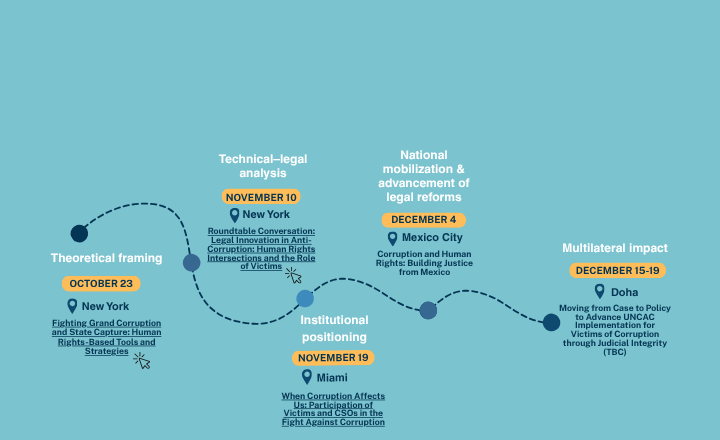
The Victims of Corruption Working Group focuses on placing victims at the centre of these conversations and strengthening recognition of their rights and interests in anti-corruption efforts. It works at the intersection of legal norms and practice, exploring how victims of corruption can gain legal standing, participate meaningfully in proceedings, and seek remedies and reparation at the national, regional and international level. The Working Group also brings together civil society experts to exchange experiences, identify emerging legal approaches and strengthen advocacy for victim-centred responses to corruption.
Objectives
The objectives of the Victims of Corruption Working Group are to:
- Put victims at the centre of discussions and advocacy around corruption
- Explore options for reparation for victims of corruption
- Contribute to a database of cases involving victims of corruption in national and regional courts
Coalition Mailing List Guidelines
Please have a look at our Mailing List Guidelines, which apply to all conversations and exchanges of information across the Coalition. By being a part of our core community and Working Groups, you agree that you have read and will follow these guidelines.