Promoting African dignity in the fight against corruption: A call to human-centered anti-corruption action
11 July 2025 –
By Sarah Wesonga, Regional Coordinator for Sub-Saharan Africa for the UNCAC Coalition
On July 11, 2025, Africa will mark another African Anti-Corruption Day, commemorating the adoption of the African Union Convention on Preventing and Combating Corruption (AUCPCC) in 2003, before entering into force in 2006. Now ratified by 48 AU Member States, the Convention has become the continent’s most comprehensive legal framework for confronting corruption. This year, the commemoration, held under the theme “Promoting Human Dignity in the Fight Against Corruption”, invites governments, civil society, and citizens to reflect on a critical truth: corruption is not just a governance failure; it is an assault on human dignity.
What is at stake: Corruption and the erosion of dignity
In markets and ministries, in elections and education, corruption chips away at the humanity of millions. It denies a mother life-saving medication at a public hospital; it forces young people to pay bribes for school placements or job interviews; it silences whistleblowers and civic voices; it leaves wrongdoing unpunished. Across the continent, corruption not only steals resources, but it also steals futures and shatters dreams.
Human dignity, as defined in the African Charter on Human and Peoples’ Rights and the Constitutive Act of the African Union, is the recognition of every person’s inherent worth and rights. Likewise, the Universal Declaration of Human Rights (UDHR) affirms that “all human beings are born free and equal in dignity and rights.” Yet for many across Africa, corruption has made this promise a distant reality.
Framing anti-corruption as a human rights imperative
Fighting corruption is often treated as a technical or institutional goal centered on audits, investigations, and enforcement. But this lens is incomplete. Corruption is a violation of human rights. It exacerbates poverty, fuels inequality, and undermines the rule of law. It particularly harms women, marginalized communities, and those already excluded from systems of power.
Promoting human dignity in the fight against corruption means:
- Ensuring prevention measures are inclusive and equitable, prioritizing access to essential services for vulnerable populations.
- Conducting investigations and prosecutions that uphold the rights of all parties—victims, witnesses, and even suspects.
- Protecting whistleblowers and activists who speak out against corruption.
- Designing systems that restore trust and offer accountability with empathy and fairness.
And for CSO networks like ours, it is to ensure that human dignity is centered at the core of our advocacy and interventions in anti-corruption work.
The UNCAC Coalition: Centering people in anti-corruption efforts
Across Africa, civil society continues to play a pivotal role in defending dignity against corruption. As the UNCAC Coalition’s Sub-Saharan Africa Regional Coordinator, I have witnessed the power of grassroots initiatives that challenge systemic abuses while uplifting affected communities.
From Zimbabwe, where civil society is advancing the implementation of the UNCAC gender resolution, to Sierra Leone, where community networks are promoting integrity and accountability through citizen reporting, local actors are reclaiming dignity through action.
This aligns with the objectives of the AUCPCC and the UN Convention against Corruption (UNCAC), both of which emphasize participation, human rights, and transparency as key principles. As highlighted in the Coalition’s open letter to UNCAC State Parties, we continue to call for a more effective, inclusive, and transparent UNCAC review mechanism that incorporates voices from civil society, especially those on the frontlines.
The human cost of civic space restrictions
But this work is not easy. The same governments that signed on to the AUCPCC often fail to live up to its spirit. Civic space across Africa is shrinking, with laws and tactics used to silence journalists, anti-corruption defenders, and whistleblowers. This directly undermines anti-corruption goals.
The 2024 Banjul Conference on Human Rights and Anti-Corruption, co-organized with the African Commission on Human and Peoples’ Rights, underscored the urgency of protecting human rights defenders. The meeting also highlighted how grand corruption cases, which often involve transnational networks, are rarely prosecuted and even less frequently result in recovered assets being returned to communities.
As noted in our parallel reports submitted for countries like Nigeria, Zambia, Uganda, and The Gambia, we continue to advocate for strengthening whistleblower protection laws and implementation, improving access to information frameworks to enable public scrutiny, advancing civic participation in UNCAC review and enforcement and integrating human rights standards in anti-corruption legislation and institutions.Our recommendations go beyond policy suggestions, and provide financial support to develop pathways and shared blueprints to follow-up on some of these recommendations. Our objective in creating ownership for these initiatives is to restore dignity in communities that have long suffered in silence.
Restitution and reparation: Fighting for justice beyond recovery
Corruption not only steals public money but it robs Africans of their dignity, rights, and life chances. Over the past year, we have amplified our members’ voices that asset recovery must go beyond repatriation. It must include reparation, including social programs and investments that directly benefit communities harmed by theft.
We have created awareness on regional processes supporting the implementation of the UNCAC like The Common African Position on Asset Recovery (CAPAR), adopted in 2020 by the African Union. We are supporting our members to engage with regional bodies to push for community-centered frameworks that prioritize the needs and voices of those directly affected by corruption. In centering human dignity, the return of stolen assets must translate into tangible benefits for people on the ground. This means not just returning funds to treasuries, but ensuring their use is transparent, participatory, and aimed at rebuilding public trust. Reparation, in this sense, is about restoring dignity by recognizing harm, empowering affected communities, and addressing historical injustice through inclusive development.
In our advocacy, we have stressed the importance of linking anti-corruption with social justice, drawing from lessons in transitional justice, feminist movements, and grassroots development.
A moment to recommit: African Anti-Corruption Day 2025
The upcoming AU Advisory Board on Corruption (AUABC) webinar offers a timely opportunity to reflect on our collective progress—and our shared failures. As we commemorate African Anti-Corruption Day under the theme of human dignity, we must resist cosmetic reforms and double down on people-centered approaches that hold power to account.
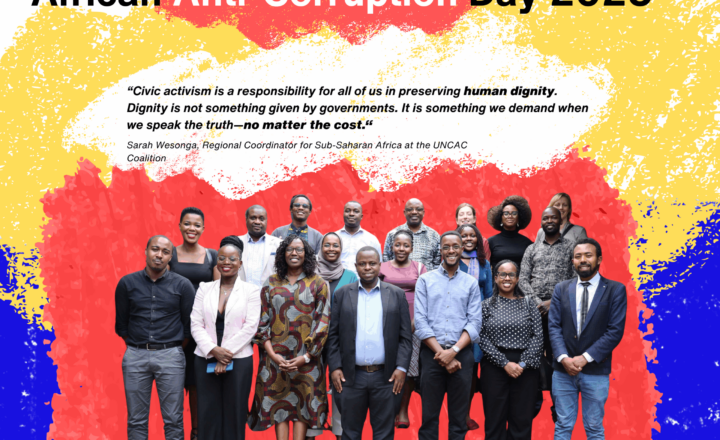
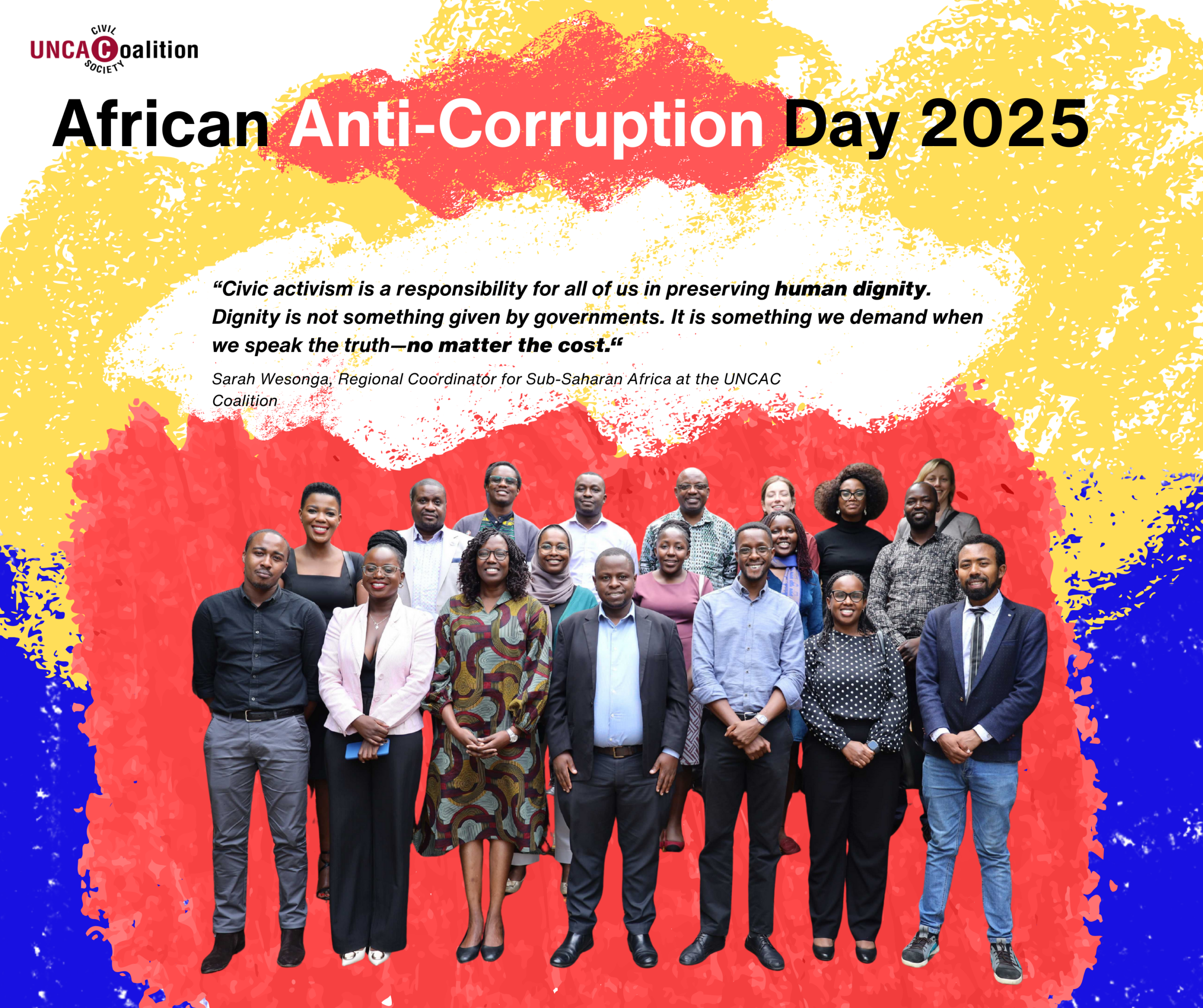
As I said during our recent regional meeting on why activism is a civic duty to protect human dignity: “Civic activism is a responsibility for all of us in preserving human dignity. Dignity is not something given by governments. It is something we demand when we speak the truth—no matter the cost.”
This year, let us raise our voices louder. Let us center people, not just policies. And let us ensure that in the fight against corruption, dignity is not only protected—but restored.

