


21 April 2026 – Guest blog by Vladimir Radomirović, editor in chief, Pištaljka
“Do you ever regret blowing the whistle?” This question always comes up at Pištaljka’s Whistleblowing Clinic.
It gets asked at the very first class, after whistleblowers have detailed the ordeal they had been through, the ups and downs of legal battles and the (mixed) reactions of their coworkers, friends and family.
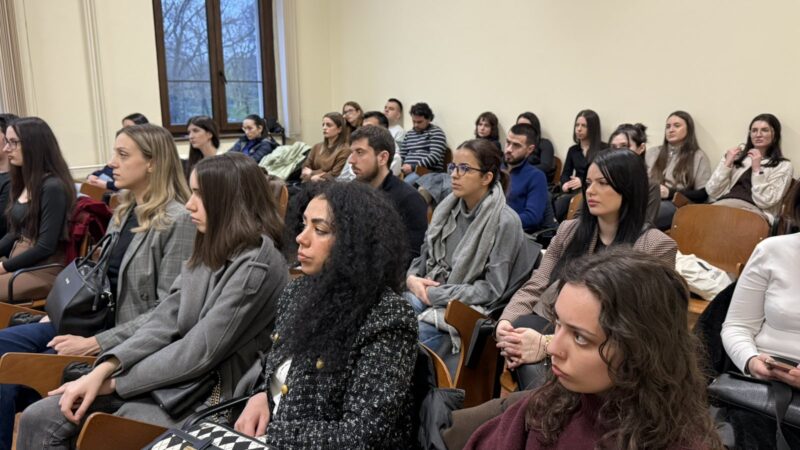
“No, never. It is who I am”, is the unmistakable answer. Students gaze at the whistleblower in wonder and amazement. This is the moment we know we have their attention.
For the past 10 years Pištaljka has been training all stakeholders in whistleblower protection in Serbia. We take pride in teaming up with the Judicial Academy to provide the licensed training of judges — Serbian whistleblowing law stipulates that all judges taking on whistleblower cases must be licensed by the Academy. We also train prosecutors, internal whistleblowing officers, lawyers and journalists.
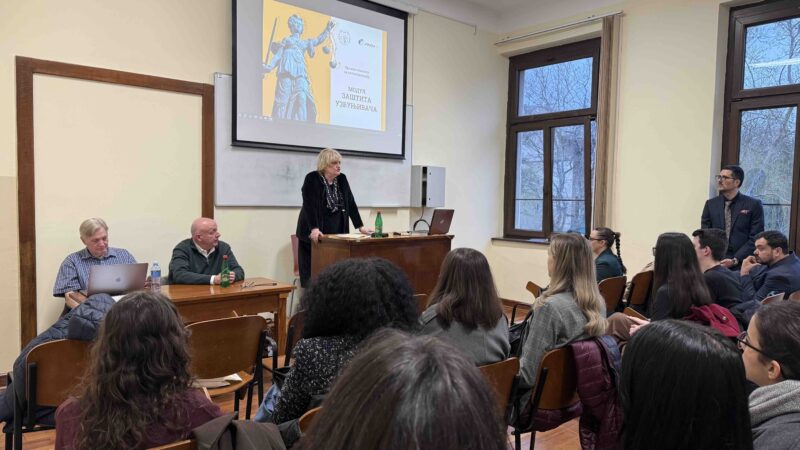
But nothing gives us more joy than the Whistleblowing Clinic at Belgrade University’s Law School (Pravni fakultet). Each spring semester, between 25 and 30 students enroll at the Clinic to learn how to effectively protect people who raise their voices against corruption. Students hear from whistleblowers, judges, prosecutors, lawyers and law professors. They also learn how to write legal briefs and produce an interim relief request for a whistleblower.
This, above all, is where Pištaljka’s legal expertise and journalism-based writing techniques come into play. We teach legal writing without the legalese, we explain how judges prefer simple and effective briefs and how a successful lawyer should always learn from the whistleblower. The interim relief request that students produce as a final paper for the Clinic is just about the only brief students get to write during their four-year studies. And they love it. Final class, when we discuss the papers, is a firework of questions and ideas.
For this clinic, we drew on the experience of our friends at the Government Accountability Project (GAP) who have long had a clinic in Washington, D.C. GAP’s Tom Devine, Samantha Feinstein and Thad Guyer have been regular speakers at our Clinic, which started as a joint project between Pištaljka, GAP and the Law School in 2021.
It is thanks to professors Ivana Krstić and Igor Vuković that we have been able to continue this important work, which also includes a month-long internship at Pištaljka. During this time students work with our lawyers on whistleblowing cases and attend court hearings.
While making sure current whistleblowers are safe, by teaching the next generation of lawyers Pištaljka is securing the future of whistleblowing.