


7 April 2026 –
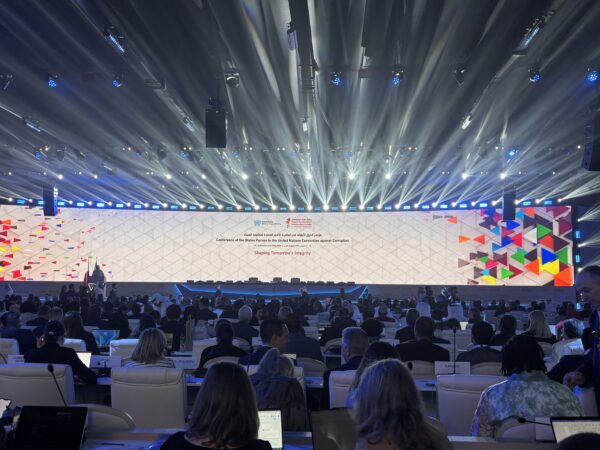
Discussions in the plenary during the 11th session of the Conference of the States Parties (CoSP) to the United Nations Convention against Corruption (UNCAC) provided civil society with important insights into States Parties’ actions, both domestically and internationally, their progress in implementing UNCAC, and their positions on key anti-corruption issues.
This summary provides an overview of States Parties’ plenary statements throughout CoSP11, including updates on delegations’ views regarding the Coalition’s priority issues, UNCAC implementation country review status updates, as well as commitments and national developments highlighted by governments.
Given that civil society is not permitted to participate in CoSP subsidiary bodies, including those of the UNCAC Implementation Review Group (IRG), the CoSP plenary remains the only formal platform within the UNCAC framework where civil society can directly engage with States Parties, making it a particularly important space for dialogue and accountability.
Moreover, in recent years, due to the lack of consensus among States parties, the UNODC has not produced reports on substantive issues following the CoSP and its subsidiary bodies’ sessions. This aligns with the ongoing practice of not mentioning country names in relation to specific statements. Therefore, there is particular value in publishing a CoSP plenary thematic summary that includes overall reflections from the plenary discussions and references to specific country statements.
How to use this summary?
The summary is divided into two main sections, both in relation to the Coalition community identified priorities: 1. Key insights and collective stock-taking of country positions. 2. Individual country and regional group statements (In the PDF document that appears in the blog).
As this summary blog post captures the entire week’s plenary statements, it is not a short read. We recommend searching the blog by topic of interest (Public procurement, human rights, whistleblower protection, asset recovery, etc.). If you are interested in specific countries’ statements, you may find the country name under both sections. However, in the individual statements section (in the PDF document at the bottom of the blog), you will find all the relevant statements of your country of interest clustered in one place, in some cases, with more detail.
Under the “UNCAC Implementation Review Mechanism” heading, you will also find individual country updates on their UNCAC country review status. (As of December 2025)
Disclaimer
This is not a comprehensive overview of all plenary discussions and country statements. It focuses on interventions related to key issues of interest for civil society.
We have made every effort to accurately capture government interventions during the plenary discussions. However, in some cases, this proved challenging due to audio problems and other technical issues. You may find many of the full country statements published on the CoSP 11 webpage, under the “documentation” tab.
A “whole-of-society approach” & participation of society
At the eleventh session of the Conference of the States Parties (CoSP11), civil society participation emerged as a prominent theme, with around 50 countries and groups (including Algeria, Australia, Austria, Bangladesh, Bhutan, Botswana, Canada, Costa Rica, Cuba, Djibouti, Dominican Republic, Ecuador, Ethiopia, Finland, Germany, Greece, Guatemala, Haiti, Iraq, Israel, Kenya, Lebanon, Mauritania, Morocco, Nauru, Nepal, Nigeria, Oman, Pakistan, State of Palestine, Poland, Portugal, Solomon Islands, Spain, Switzerland, Timor-Leste, Togo, Turkmenistan, Türkiye, Tuvalu, Uganda, UK, Uzbekistan, Yemen, Zambia, and Zimbabwe) referencing the role of civil society, non-governmental organizations, or a “whole-of-society” approach. Chile, Norway, Croatia, and the EU were particularly vocal, stressing the essential role of civil society, and referring to whistleblowers and investigative journalists as fundamental in ensuring accountability. Several states also reported concrete measures, including Chile’s inclusion of civil society in its CoSP11 delegation and Kenya’s establishment of civilian oversight committees across all 47 counties. Others, including Germany and Portugal, emphasized the need for greater transparency and civic engagement, framing anti-corruption as closely linked to human rights.
These discussions took place alongside broader debates on the future of the UNCAC Implementation Review Mechanism (IRM), as many countries transition from the second review cycle to shaping the next phase. Asset recovery and international cooperation received significant attention, with issues central to civil society advocacy, including whistleblower protection, environmental crime, gender equality, and human rights, being reflected in statements, though falling short of the depth and consistency we deem needed. Another trend was the growing focus on digitalization, emerging technologies, and artificial intelligence, with countries debating both the risks and opportunities behind these tools for anti-corruption efforts.
General public participation was often highlighted through digital tools and education. Paraguay and Bolivia reported high engagement through online reporting portals and transparency platforms. Education initiatives also gained traction. Participatory approaches to national strategies were reported by Morocco, Palestine, and Ecuador, while Bangladesh described how recent political developments have led to increased civic engagement through open hearings and local committees.
Despite the present support, a clear divide remains at the international level, on how to approach the participation of society in the IRM. While countries such as Canada, Finland, the USA, and the EU called for a more transparent and inclusive IRM with greater stakeholder participation, others (including Russia and the Group of 77 and China) reaffirmed its strictly intergovernmental nature.
UNCAC Implementation Review Mechanism
The use of IRM recommendations to drive national and institutional reforms was a recurring theme, with states reporting that the review process provided a roadmap for domestic change. Several countries reported enacting or amending laws alongside, or informed by, IRM findings, particularly regarding whistleblower protection (Botswana, Senegal, and Gabon), access to information (Senegal), and non-conviction-based forfeiture (Mali and Peru). The completion of review cycles also led to updated national anti-corruption strategies, such as the ten-year horizon adopted by Lao PDR.
A clear divide was evident regarding the next phase of the IRM. The EU, Germany, France, and the United States called for substantial reforms, including mandatory publication of reports, centralized review calendars, and the formal inclusion of civil society, academia, and the private sector in the review process. On the other hand, Russia and a joint group of 15 states (including Belarus, Burkina Faso, China, Cuba, Iran, Kyrgyzstan, Libya, Namibia, Nicaragua, Palestine, Pakistan, Sudan, Tajikistan, Uzbekistan, and Venezuela) argued that the mechanism must remain strictly intergovernmental, non-intrusive, and respectful of state sovereignty. To reduce administrative burdens, Kuwait, South Africa, and Colombia proposed thematic grouping of chapters, while Indonesia advocated for a Secretariat-managed dashboard to track implementation progress and technical assistance needs.
States also highlighted cooperation with NGOs to enhance oversight. Chile, Costa Rica, and Slovakia, confirmed their adherence to the Coalition’s Transparency Pledge, committing to inclusive review processes. Chile further noted its engagement with civil society through side events linked to its review process.
Individual statements under agenda item 2 on the IRM (in order of delivery)
- Indonesia: Reflected on reviews conducted in 2012 and 2018, noting coordination challenges and COVID-19 disruptions, and adopted a 2025 priority programme to address remaining gaps. It supported a more results-oriented next IRM phase, including a Secretariat-managed dashboard and broad stakeholder engagement, while reaffirming the mechanism’s intergovernmental nature.
- Botswana: Developed a national implementation plan based on IRM recommendations, enacted a Whistleblowing Act, and is currently reviewing its corruption law to enhance institutional independence. It also passed 2025 amendments to the Financial Intelligence Act to cover virtual assets and non-profits and expressed support for voluntary periodic reporting under the IRM.
- European Union: Completed its first-cycle executive summary and intends to publish its full report, emphasizing that civil society was independently consulted during the review. It advocated for enhanced transparency in the next IRM phase, including a centralized calendar and disclosure of consulted non-state actors.
- Germany: Germany strongly supported launching a new IRM phase and announced plans to publish a national follow-up report covering recommendations from both review cycles. It backed increased transparency and civil society participation, including on-site visits with NGOs, business, and academia.
- Kuwait: Proposed a structured approach for the next IRM phase that emphasizes practical implementation, statistical data, and enforcement outcomes. It suggested reviewing chapters in thematic groups, one for prevention and criminalization, and another for international cooperation and asset recovery, to leverage functional linkages.
- France: Urged systematic follow-up of recommendations and called for review conclusions to be made accessible to the public and technical assistance providers. It supported inclusive reviews involving civil society, academia, business, and media to ensure a diversity of perspectives.
- Brazil: Reported legislative reforms following its second-cycle summary, including a 2025 technical cooperation agreement to coordinate leniency agreements and legal certainty. It highlighted new laws criminalizing conspiracy by criminal organizations and supported the adoption of the resolution on the next IRM phase.
- Japan: Reported that its second-cycle review is ongoing and highlighted peer learning from its role as a reviewing state for Kyrgyzstan. It called for user-friendly self-assessment tools and a streamlined next IRM phase to manage administrative burdens and resources effectively.
- China: Hosted its second-cycle visit in June 2025, involving government and non-government sectors, with the review expected to conclude in 2026. It maintained that the IRM must remain intergovernmental, non-intrusive, and non-punitive, opposing expanded stakeholder participation beyond agreed parameters.
- Gabon: Adopted a decree establishing a dedicated asset recovery body and implemented preventive reforms like mandatory asset declarations for political candidates. It prioritized protections for whistleblowers and victims and requested technical assistance for digitalization and financial investigations.
- Myanmar: Established corruption prevention units at various levels and reported reforms in public financial management and awareness-raising. It emphasized that asset recovery is a cornerstone of UNCAC and reaffirmed the IRM’s intergovernmental and cooperative nature.
- Mali: Mali outlined legislative and institutional reforms linked to UNCAC implementation, including non-conviction-based forfeiture and new asset recovery structures, and called for respect for sovereignty and consensus in shaping the next IRM phase.
- South Africa: Completed both IRM cycles and adopted a strategy emphasizing cooperation with civil society, youth, and business. It highlighted the integration of gender considerations and proposed that future reviews assess practical implementation through statistics and follow-up on recommendations.
- Lao People’s Democratic Republic: Highlighted adoption of its second National Anti-Corruption Strategy (2025–2035), legal and administrative reforms, and digitalization to reduce corruption risks. It also reported participation as a reviewing State and readiness for international cooperation on overseas asset recovery.
- The Gambia: Aligned national laws with UNCAC through reforms in auditing, procurement, and financial intelligence as part of its democratic transition. It acknowledged resource constraints and reaffirmed its commitment to using IRM recommendations as a framework for improvement.
- Benin: Operationalized its High Commission for Preventing and Combating Corruption in 2024 and established a National Asset Recovery Office. It hosted a second-cycle visit in 2025 and supported IRM reforms to strengthen the follow-up of recommendations and technical assistance.
- Russian Federation: Coordinates UNCAC implementation through the Prosecutor General’s Office, focusing on conflicts of interest and politically exposed persons. It emphasized that all IRM documentation must be adopted intergovernmentally and rejected “behind-the-scenes” approaches to the mechanism’s next phase.
- United States of America: Stated it would not support the next IRM phase without substantial reforms, including mandatory publication of reports and follow-up on recommendations. It called for the inclusion of qualitative and quantitative data and emphasized transparency as non-negotiable for accountability.
- Peru: Mandated asset declarations for civil servants, established judicial integrity offices, and has implemented non-conviction-based forfeiture since 2019. It prioritized asset recovery coordination among judicial and financial intelligence institutions, framing the IRM as valuable for national capacity.
- Burkina Faso: Called for a next phase focusing on beneficial ownership, digitalization, and illicit financial flows. It highlighted the importance of transparency in the drawing of lots and avoiding duplication with other monitoring mechanisms.
- Guatemala: Highlighted inclusive national practices involving civil society, indigenous peoples, and academia, arguing for similar inclusiveness in the IRM. It advocated for digital tools and concise reports to reduce delays and ensure continuity in the next review phase.
- Switzerland: Completed its second-cycle review and emphasized the peer review process as a tool for mutual learning and structured dialogue. It supported IRM reforms to improve efficiency and predictability while respecting national capacities.
- Colombia: Nearing completion of its second-cycle review and confirmed its intention to publish the final report. It called for more focused reviews to reduce administrative burdens and emphasized integrating asset recovery capacity-building into the IRM.
- Pakistan: Reported criminalizing UNCAC offences domestically and emphasized international cooperation to address safe havens for corrupt actors. It proposed a methodology to measure the effectiveness of anti-corruption agencies and suggested digital platforms for real-time monitoring.
- Chile: Completed its second-cycle review, complied with the UNCAC Coalition’s Transparency Pledge, and established a multi-stakeholder Anti-Corruption Alliance. It engaged civil society through side events and supported strengthening IRM transparency and efficiency.
- Senegal: Adopted a national strategy, whistleblower law, and access to information law, which contributed to its removal from FATF and EU grey lists. It reported reforms in asset declaration and the establishment of specialized financial crime units.
- Bhutan: Adopted its second-cycle executive summary and proposed mandatory follow-up reporting to the IRG to improve the impact of reviews. It supported maintaining country visits and tailoring review sequencing to national contexts.
- Islamic Republic of Iran: Reaffirmed the IRM as an intergovernmental and cooperative mechanism and stressed the importance of effective follow-up to recommendations. It cautioned against approaches inconsistent with consensus-based decision-making.
- Zimbabwe: Completed its second-cycle review and hosted reviewers from Angola and Gabon, noting the IRM’s role in strengthening institutional capacity. It called for enhanced technical assistance and simplified tools tailored for developing countries.
- Romania: Highlighted inclusive evaluation systems involving civil society, academia, and the private sector to monitor its anti-corruption strategy. It aligned with the EU and viewed the IRM as a platform for learning and trust-building.
- Morocco: Supported a comprehensive next phase for the IRM that includes coordination with other mechanisms and systematic follow-up to recommendations. It emphasized the need for enhanced transparency and stakeholder participation.
- Timor-Leste: Currently undergoing its second-cycle review and hosted an on-site visit in May 2025 involving experts from Bulgaria and the Marshall Islands. It committed to promptly publishing the final report and executive summary upon completion in 2026.
- Tunisia: Emphasized the IRM as a practical tool for assessing compliance with UNCAC and noted that Tunisia is currently undergoing its second-cycle review. It highlighted prevention-oriented legal reforms, including Decree No. 54 on cybercrime, and linked anti-corruption to the protection of economic and social rights.
- Joint Group (Russian Federation, Belarus, Burkina Faso, China, Cuba, Iran, Kyrgyzstan, Libya, Namibia, Nicaragua, Palestine, Pakistan, Sudan, Tajikistan, Uzbekistan, and Venezuela): Reaffirmed that the IRM must remain intergovernmental, non-intrusive, and free from rankings, opposing alterations that undermine sovereign rights. They described asset return as a fundamental principle, urged the removal of obstacles to recovery, and supported a special CoSP session on the topic.
- Costa Rica: Concluded its second-cycle review, followed up on previous recommendations through the Office of the Ombudsman, and signed the UNCAC Coalition Transparency Pledge. It advocated for the next IRM phase to focus on a single chapter per cycle and for country reports to be clearer and more concise.
- Syrian Arab Republic: Participated at CoSP11 as an observer and outlined a preventive anti-corruption model led by its Central Authority for Oversight and Inspection. It acknowledged systemic corruption, framed asset recovery as a sovereign right tied to reconstruction, and emphasized societal oversight and international cooperation while working toward ratification of UNCAC.
Gender
Gender was referenced by a limited number of countries and groups addressing it directly, including the EU, Germany, Spain, Lebanon, South Africa, Ghana, Cuba, Indonesia, France, the USA, and Afghanistan. When raised, some countries pointed to the disproportionate impact of corruption on women, and the need to reflect this in national anti-corruption strategies and integrity systems.
Concrete steps were reported: South Africa has incorporated gender into its National Anti-Corruption Strategy, while Ghana is integrating gender and human rights into its next ten-year strategy, including identifying sextortion as an emerging risk. Several actors, including the EU, Germany, Indonesia, and France, referred to integrating gender and human rights considerations into anti-corruption projects, with Germany applying this approach across more than 20 anti-corruption projects. Indonesia also reported workshops on corruption, gender, and human rights, while Burkina Faso highlighted awareness-raising efforts that incorporate gender considerations. Cuba provided a concrete data point, reporting that women hold over 70% of positions in the judiciary and oversight bodies, and Afghanistan pointed to the impact of corruption on women’s access to education and public life in crisis contexts.
Even when acknowledged, gender was rarely backed up with concrete implementation. More concerningly, the USA, when addressing technical assistance, suggested focusing on projects with clear anti-crime goals and not wasting money on projects “that advance ideological agendas and divisive issues like SDGs and gender mainstreaming.”
Human Rights
Human rights were linked to anti-corruption, though still by a relatively limited group of countries. Approximately 10 UNCAC parties, including Germany, Italy, Colombia, Portugal, Pakistan, Palestine, Ukraine, South Africa, the Maldives, and the EU, linked corruption as a barrier to the enjoyment of rights. Some, including the EU, linked anti-corruption efforts to human rights and SDGs.
A number of countries pointed to concrete approaches. Costa Rica recognized access to public information as a human right, while Peru introduced non-conviction-based forfeiture with safeguards for due process. Germany reported mainstreaming anti-corruption across its technical assistance through a human rights framework, and Tunisia linked economic and social rights to effective asset recovery and good governance. Pakistan raised concerns about how human rights considerations are applied in recovery processes, while Syria and Gambia highlighted how corruption undermines the delivery and restoration of essential public services, particularly in fragile contexts.
Access to Information
At least six countries reported recent or planned reforms on access to information, including Namibia, Zambia, Austria, Malaysia, Costa Rica, and Senegal. Additional measures were referenced by Brazil, Paraguay, France, Australia, Papua New Guinea, and Ghana. These ranged from adopting Right to Information or Freedom of Information laws (highlighted by Namibia, Zambia, and Senegal) to expanding digital transparency tools, such as public portals in Brazil and Paraguay.
Several countries also reported efforts to improve implementation and public access. Brazil shared its institutional transparency model and supported its implementation in countries such as Cabo Verde. Australia highlighted its Open Government Forum as a platform for public accountability, and France pointed to the need to improve access to country review conclusions. More broadly, Papua New Guinea, Ghana, and Malaysia emphasized digitalization and accessibility as key to making information available in practice.
Timor-Leste identified access to information as a legislative gap, while others, such as the Marshall Islands, pointed to broader challenges in transparency. Although some countries, such as Costa Rica, have recognized access to information as a fundamental human right, others are still in the process of developing or strengthening effective frameworks.
Whistleblower Protection
Whistleblower protection was highlighted by at least 18 countries and groups. Reported measures ranged from new laws and reporting channels (Chile) and specialized units (Zimbabwe), to safeguards against retaliation in both public and private sectors (Belgium, Spain, Costa Rica). Botswana reported adopting new legislation, while Senegal referenced related reforms. Across statements referencing the topic, the focus shifted between adopting legal frameworks to making them work in practice, including through training, toolkits, and dedicated systems such as those reported by Indonesia.
Some countries reported on good practices. Azerbaijan shifted the burden of proof to employers, South Korea expanded compensation and introduced conciliation mechanisms, and France set fines of up to €60,000 for revealing a whistleblower’s identity. Japan focused on awareness-raising, while Norway linked whistleblower protection to civic space and human rights, and Germany highlighted broader accountability frameworks.
At the same time, implementation gaps remain a challenge. Papua New Guinea mentioned the need for broader protections, while Malaysia, despite 2025 reforms, reported technical challenges in setting up secure reporting systems. Australia reported on a survey of 60,000 respondents which found “fear of retaliation” to be the main barrier to reporting.
Political Financing
Among references on the draft resolution, a group of states including Australia, Ghana, Mongolia, Indonesia, Armenia, Georgia, Croatia, Madagascar, Japan, Timor-Leste, Iraq, and Gabon highlighted reforms or challenges. Efforts focused on improving transparency, including lowering disclosure thresholds and introducing real-time reporting (Australia), as well as promoting oversight through codes of conduct (Iraq).
More specifically, Australia introduced near real-time disclosure of political donations during election periods, while Gabon extended asset declaration requirements to candidates for public office. Armenia framed political finance transparency as a core preventive tool within its governance system. More generally, Ghana reported efforts to strengthen transparency in party and campaign financing, along with public campaigns and workshops, while Indonesia reported on awareness-raising initiatives.
Challenges included Timor-Leste and Georgia pointing to weaknesses or ongoing transitions in managing political finance oversight, while Japan highlighted structural limits to political funding. More broadly, Norway expects the new resolution to increase demand for technical assistance, suggesting this as an emerging need, with many countries yet to develop or report on more comprehensive frameworks and practices.
AI and emerging technologies
References to digitalization, AI, and emerging technologies were common throughout the plenary statements. At least 17 states (including Portugal, Brazil, Russia, Türkiye, Uzbekistan, Indonesia, Korea, Iraq, Kazakhstan, China, France, Malaysia, Pakistan, the UK, Albania, El Salvador, and Colombia) reported technology-driven initiatives or related legislation. Applications ranged from risk analytics (Uzbekistan, Portugal) and financial tracking (China) to investigations (the UK, Pakistan) and procurement (Albania, El Salvador, Colombia).
Some shared concrete practices. Uzbekistan established an AI-based risk analytics centre, while El Salvador and Colombia use data systems for real-time monitoring in procurement. France introduced a law targeting anonymous crypto-assets, and Türkiye adopted ethical principles for AI use in the public sector. Capacity-building efforts included South Africa’s Anti-Corruption Cyber Academy, while countries such as Gabon, Lao PDR, Mali, Burkina Faso, and Guatemala highlighted broader digitalization efforts.
At the same time, risks are visible. Maldives, Iraq, and Russia warned about virtual assets, disinformation, and covert political financing, with responses such as Tunisia’s decree on IT misuse and Botswana’s expanded financial intelligence rules. Armenia also flagged disinformation risks. While there is growing uptake of AI and emerging technologies, discussions suggest that this priority issue is lagging behind in regulation and oversight.
Asset Recovery and International Cooperation
Asset recovery and international cooperation were significantly referred throughout CoSP11 statements. Many UNCAC parties touched upon the issue and over 20 reported on reforms and recovered assets. Armenia, Zambia, the Dominican Republic, Peru, France, Indonesia, Malaysia, South Africa, India, Russia, China, Pakistan, Ghana, Nigeria, Japan, Mauritania, Vanuatu, Senegal, Mali, and Benin highlighted measures such as non-conviction-based forfeiture, stronger tracing powers, and specialized recovery units. Large recoveries were reported by India, Malaysia, Indonesia, and South Africa, while Zambia linked recovered funds to education.
A key shift was towards the increasing use of non-conviction-based forfeiture and strengthened cooperation. At least five countries, including Peru, Armenia, the Dominican Republic, Venezuela, and Korea, reported advancing such tools, while Brazil, France, and Indonesia reported relying on networks such as GlobE and StAR to facilitate cooperation and address challenges with conventional mutual legal assistance.
Challenges in the area remain, and the topic remains polarized. Countries including DRC, Maldives, Seychelles, Pakistan, Zimbabwe, Tanzania, Russia, and China cited delays, lack of cooperation, and “safe havens” as key obstacles. The group of 15 states led by Russia framed asset return as a sovereign right and raised concerns about politicization. At the national level, Lao PDR reported no overseas recovery cases despite having a framework in place. Human rights aspects were also noted, with the Gambia using recovered assets for reparations, while Venezuela and Iran argued that sanctions impede the recovery of assets.
Asset Declarations and Conflicts of Interest
Around 20 countries reported reforms under asset declarations and conflicts of interest (Ukraine, Uganda, Kyrgyzstan, Mauritania, Botswana, Gabon, Russia, Peru, Senegal, Tanzania, Indonesia, Romania, France, Brazil, Zambia, Ghana, South Korea, Greece, Slovakia, and Timor-Leste). According to the statements, many reforms or measures focused on expanding who must declare assets (Mauritania), introducing mandatory electronic systems (Ukraine, Uganda, Kyrgyzstan), and strengthening oversight through ethics bodies and scrutiny mechanisms, including for high-risk officials (Botswana).
Some countries reported on advanced practices. Ukraine claims to maintain one of the largest e-declaration databases, while France relies on an independent authority to verify declarations. Romania introduced rules on “revolving doors” between public and private sectors, and Bangladesh adopted a strict no-gift policy for public officials. Other efforts include lifestyle audits, training on conflicts of interest (Indonesia, Tanzania), and institutional approaches linking declarations to internal controls (Brazil).
Public Procurement
Plenary statements pointed towards public procurement reforms often being driven by digitalisation, with Albania, Côte d’Ivoire, and Tajikistan moving towards more fully digitalized systems. Albania, Côte d’Ivoire, Tajikistan, Tanzania, Malaysia, France, Papua New Guinea, China, Uganda, the Philippines, Colombia, Honduras, and El Salvador reported new measures or reforms focusing on e-procurement systems, automating processes, and improving transparency, along with efforts to integrate beneficial ownership data into procurement (Philippines).
Mexico reportedly saved $3.8 billion in one year by canceling flawed tenders, and Colombia introduced “model documents” in high-risk sectors to increase competition and reduce corruption. France launched an international procurement integrity initiative, and Armenia established structures to involve civil society in procurement oversight. Other countries, including Lao PDR, Mali, and the Gambia, highlighted digitization efforts to streamline procedures and reduce risks.
Procurement was highlighted by some countries as a high-risk area. Timor-Leste and the Marshall Islands identified it as requiring further reform, while Ghana pointed to gaps in linking procurement systems with beneficial ownership registers.
Environmental Crime and Corruption
Brazil, Madagascar, Germany, France, Indonesia, Malaysia, and Tuvalu, alongside regional groups such as the Group of Latin American and Caribbean Countries (GRULAC) and the African Group, highlighted links between corruption and environmental harm. Statements focused on risks in sectors such as mining, forestry, and energy, and on protecting natural resources from exploitation. Madagascar reported establishing a national task force to combat the pillage of natural resources, and Brazil linked anti-corruption to climate integrity in the context of UNFCCC COP 30 (November 2025). Other examples included Indonesia highlighting sector-specific risks, and Malaysia referencing environmental awareness initiatives.
Except for a few concrete measures, most countries did not provide details on strategies or data. While the link between corruption and environmental harm was acknowledged, particularly through regional initiatives and a draft resolution, it didn’t translate into statements on detailed policy responses.
Victims of Corruption and Reparation
A few countries, including France, South Korea, Pakistan, Afghanistan, Romania, Gambia, Switzerland, Zambia, and Venezuela, touched upon victim restitution, most under the scope of asset return. Approaches also focused on enabling victim participation in proceedings (Afghanistan) and using recovered funds for public benefit. Nigeria highlighted the development impact of returning assets, while the EU and Germany pointed to the disproportionate harm corruption causes to marginalized groups.
Some countries reported more targeted practices, with Romania reportedly allocating 50% of recovered assets to prevention, education, and victim protection, while Switzerland has signed restitution agreements directing funds to health and social projects in countries such as Equatorial Guinea and Uzbekistan. France and South Korea highlighted victim-centered recovery approaches, and Burkina Faso recognized civil parties in economic crime cases to strengthen participation. Brazil and Benin framed asset recovery as an ethical duty towards affected populations.
Despite these examples, the area remains underdeveloped. Only a handful of countries, including Gabon and Mali, referred to strengthening legal frameworks for victim protection, and detailed mechanisms for participation or compensation were rarely described.
Grand Corruption
Several countries pointed to structural and high-level corruption challenges. Syria described entrenched, systemic corruption amounting to state capture, including the erosion of merit-based systems, while Madagascar linked corruption to global financial opacity. Others, including Russia, Nigeria, and the USA, highlighted the cross-border nature of grand corruption and its links to serious crime. The USA also pointed to corruption within law enforcement and the judiciary as a key enabler, while Haiti noted growing connections between grand corruption, armed groups, and organized crime.
Some initiatives focused on international coordination. The UK highlighted the role of the International Anti-Corruption Coordination Centre (IACCC), which has identified £994 million in stolen assets since 2023, and joined Angola, Malaysia, Norway, Switzerland, and Ukraine in committing to publish data on grand corruption cases. Russia also introduced liability for intermediaries involved in laundering stolen funds.
Beneficial Ownership
Over 10 countries (including Nepal, Zambia, the UK, Botswana, Kuwait, the Philippines, Ghana, Bhutan, Nigeria, Uganda, Indonesia, Guatemala, and Mongolia) reported reforms or commitments on beneficial ownership. Additional references came from Tanzania, the Gambia, South Africa, Russia, and Armenia. The main focus of these measures aligned with establishing centralized registers and requiring ownership information upon company registration, with countries such as Ghana, Zambia, the Philippines, Bhutan, Botswana, and Armenia developing or digitalizing such systems. Botswana amended its Financial Intelligence Act in 2025 to expand disclosure and due diligence requirements, while Armenia reported the use of beneficial ownership transparency as a core preventive tool.
Gaps remain. Timor-Leste and theMarshall Islands identified the absence of beneficial ownership registers as a critical gap, while the Gambia and Nigeria pointed to ongoing challenges in implementation and enforcement, particularly in complex financial investigations. Ghana pointed to gaps in linking procurement systems with beneficial ownership registers.
Technical assistance
Technical assistance statements often focused on moving toward digital and technology- based solutions. States called for support on e-procurement, digital forensics, and the tracing of crypto-assets. Indonesia highlighted the use of AI-assisted evidence analysis and digital asset tracking as part of these efforts.
The delivery of technical assistance was a point of divergence. Countries such as China and Niger advocated for a “demand-driven” approach that upholds sovereign equality and remains free from political preconditions or interference in domestic affairs. On the other hand, the United States emphasized that its assistance is conditional on measurable impact and a country’s demonstrated willingness to prosecute corruption. The USA specifically positioned itself against using resources for “ideological agendas like gender mainstreaming”. Other countries, including Germany, France, and Ghana, stressed the importance of integrating gender-responsive approaches and strengthening civil society engagement, with Norway highlighting that independent media and oversight institutions are key to ensuring technical assistance has a lasting impact.
Other topics under technical assistance included whistleblower protection, with Malaysia asking for assistance in the implementation of its 2025 reforms.
Fullscreen Mode