


12 August 2025 – written by Sarah Wesonga, Regional Coordinator for Sub-Saharan Africa at the UNCAC Coalition
Whistleblowers have always been a critical part of the fight against corruption in Africa. From health workers exposing procurement scams to auditors uncovering irregular spending, their courage has helped bring truth to light in environments that often punish integrity. But despite their importance, whistleblowers across the region continue to face retaliation, isolation, and in some cases, violence. Adequate protection is either missing or too weak to work. Across Africa, they remain some of the most vulnerable people in the anti-corruption space.
Whistleblowing is one of the most effective ways to uncover corruption. According to the Association of Certified Fraud Examiners (ACFE), over 40% of fraud cases globally are exposed by whistleblowers. The ACFE additionally estimates that whistleblowers are more effective than traditional tools of governance, for example, external audits; the former managing to uncover 45% of fraud cases, while the latter a mere 5% in comparison. This makes one thing very clear: whistleblowing works.
On 3 July 2025, the UNCAC Coalition hosted its 16th Regional Meeting for Sub-Saharan Africa, with a focus on whistleblower protection. The discussion could not have come at a more urgent moment, as we are witnessing growing attacks on those who dare to speak out against corruption and abuse of power.
Stories from the region: What the frontlines look like
The legal landscape safeguarding whistleblowers in Africa is still patchy. Fewer than 15 countries have adopted dedicated laws to protect whistleblowers. Even where legislation exists, cases show that individuals who report wrongdoing often face harassment, loss of livelihood, physical threats, or worse. Many whistleblowers choose to remain anonymous, and some end up relying on journalists to get their stories out — putting both at risk.
Members shared how existing laws in Africa are failing to keep pace with reality. In some countries, legal frameworks exist, but whistleblowers still have no safe reporting channels or face retaliation with no recourse. Elsewhere, political interference has weakened independent institutions meant to investigate disclosures. Civic space is shrinking, and public trust is eroding fast. In countries like Ghana, Kenya, and South Africa, journalists have faced pressure, legal threats or violence for refusing to reveal sources or reporting on leaked documents.
We heard powerful experiences from members working across diverse and often difficult contexts. Rangarirai Chikova of the Pan African Lawyers Union reminded us that strong laws are only part of the solution. If they are not implemented or respected, they offer little protection in practice. Samuel Komu from Transparency International Kenya spoke about the frustrations of pushing for legal reform in a context where political will is limited. Still, sustained advocacy has kept the issue alive in public discourse.
In South Sudan, Luate Joseph of Amalna shared how they have turned to community radio, theatre, and public art to raise awareness and support whistleblowers. In a place where legal frameworks are fragile and civic space is restricted, these creative tools have become a way to keep the conversation going and encourage others to speak up.
The real cost of speaking out without protection
Grandy Ntumbo, a former auditor at Zambia’s Ministry of Finance, exposed the misuse of World Bank funds meant for girls’ education and faced retaliation for doing the right thing. Only recently did the Court of Appeal rule in his favour. It was a rare win, and an important one, but it came years after the fact.
Others haven’t been so lucky. Earlier this year, Pamela Mabini, a community activist in South Africa, was shot outside of her home in the Eastern Cape. She had spent years working with her organisation, the Maro Foundation, to challenge crime and corruption in her community. Her death is a stark reminder that for many whistleblowers, the danger is real and so is the silence that often follows.
South Africa’s own history is full of names that highlight the personal cost of speaking out. Babita Deokaran, Athol Williams, Jimmy Mohlala, Cynthia Stimpel, Martha Ngoye. All of them exposed serious wrongdoing in state institutions or state-owned enterprises. Most of them were left isolated, unsupported, and exposed.
Elsewhere, whistleblowers are forced into exile. Central African journalist Ephrem Yalike-Ngonzo, who worked with Forbidden Stories and the Platform to Protect Whistleblowers in Africa (PPLAAF), exposed how Russian-linked operatives used disinformation to manipulate coverage of the conflict. He fled the country after receiving threats. His case reflects how information warfare, foreign interference and whistleblower retaliation are increasingly intertwined.
The regional meeting highlighted just how urgent the need for coordinated action is. We must move beyond individual cases and look at the bigger picture. Protecting whistleblowers is not just about law reform. It is about shifting political culture, building public trust, and putting in place systems that value truth and accountability over loyalty and silence.
So where do we go from here?
Governments in Africa must do more to meet their obligations under the UN Convention against Corruption (UNCAC) and the African Union Convention on Preventing and Combating Corruption. Article 32 of the UNCAC places a clear obligation on States to protect whistleblowers. That means passing legislation where it doesn’t exist. It also means enforcing it where it does. Protection frameworks need to be backed by functioning oversight bodies, strong enforcement mechanisms, and secure, anonymous reporting systems.
Civil society has a key role to play. From legal aid and strategic litigation to advocacy, storytelling and safe spaces for whistleblowers. Although the work being done across the continent is impressive, it remains underfunded and overstretched. Greater support, more collaboration, and stronger regional networks are urgently needed.
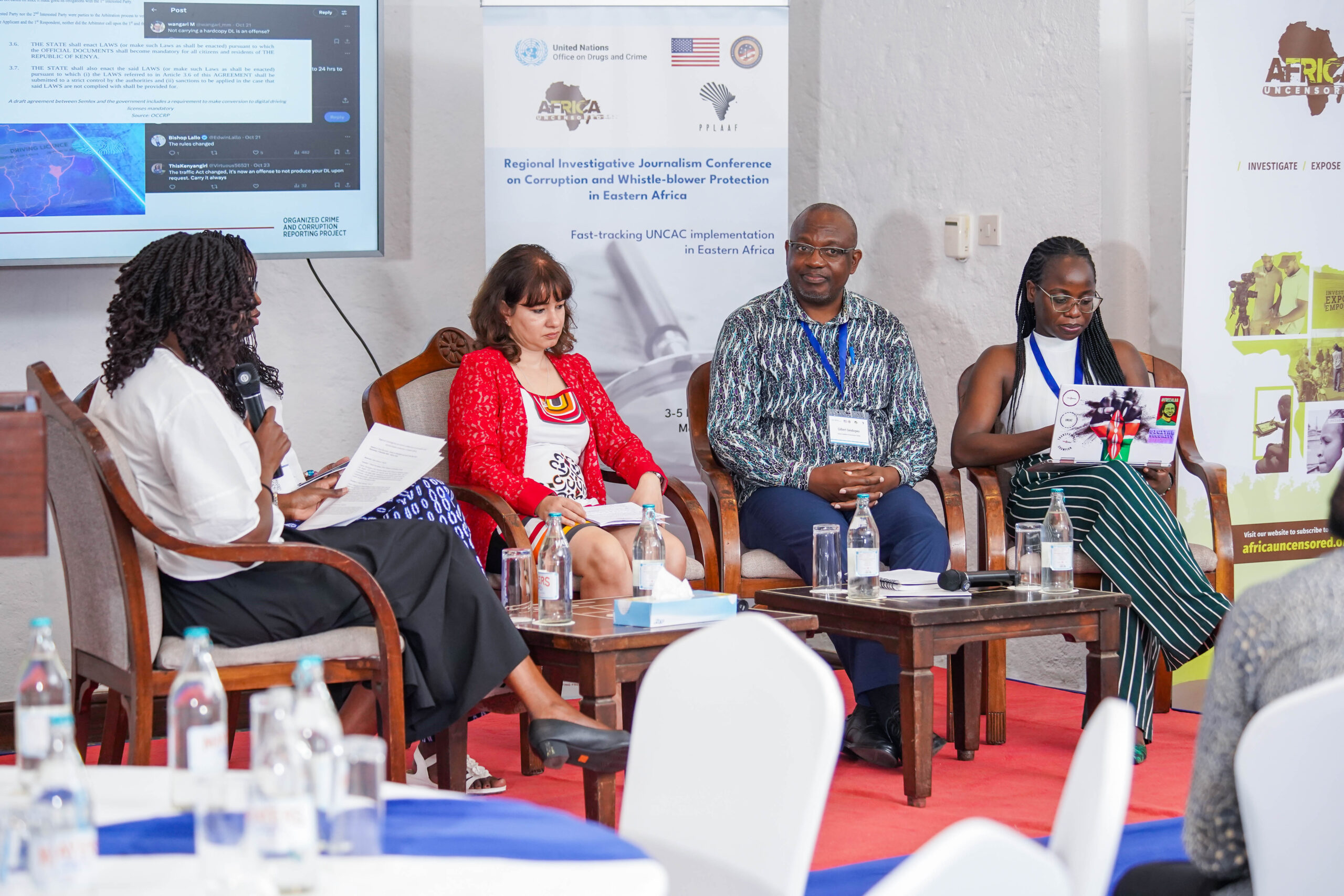
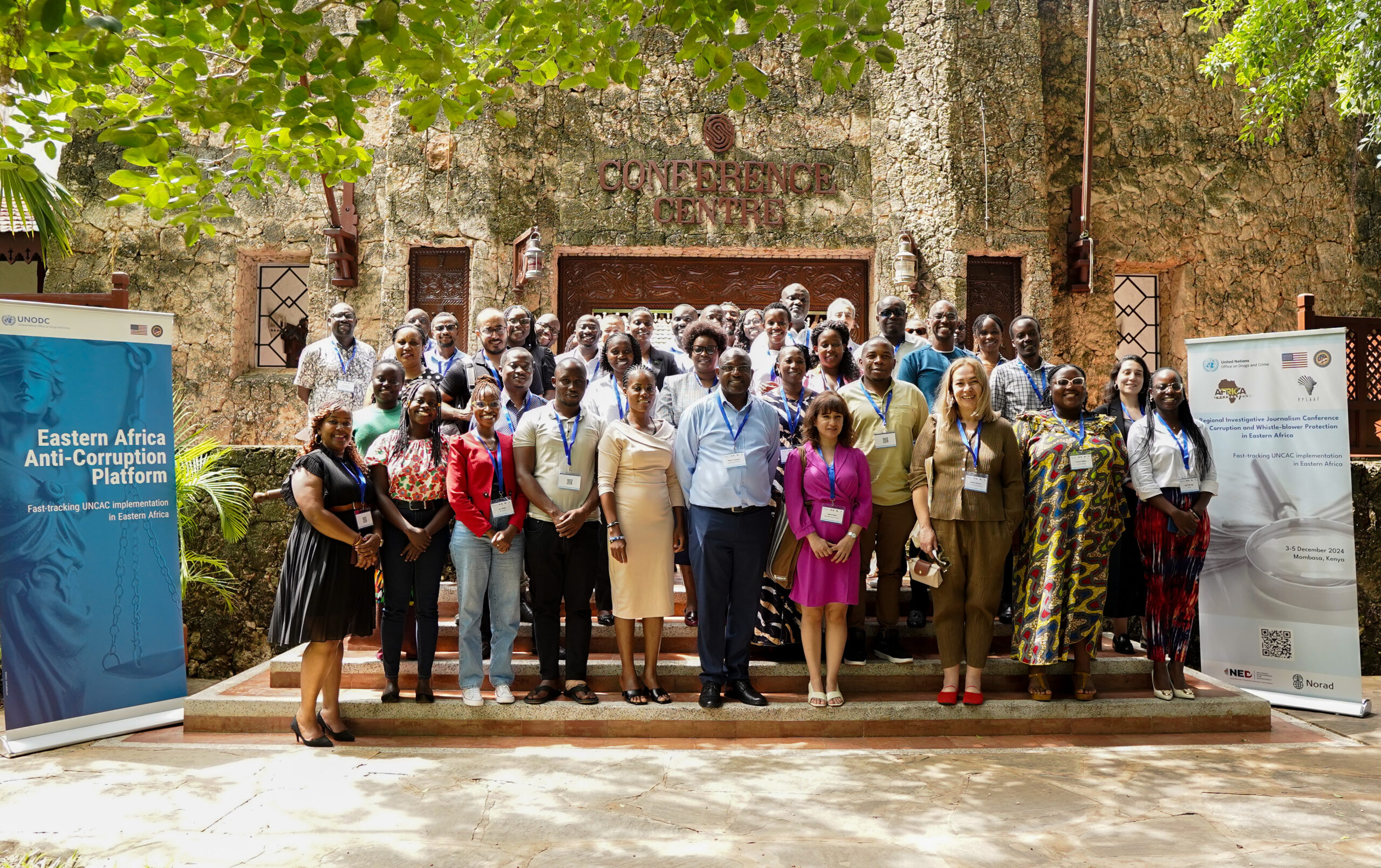
An example of meaningful collaboration is the regional investigative journalism workshop on whistleblower protection. This was convened under the auspices of the East Africa Regional Anti-Corruption Platform, in partnership with PPLAFF and Africa Uncensored. The workshop brought together investigative journalists from across the region, focusing on collaboration with whistleblowers to expose corruption, fact-check disclosed information, and amplify stories while ensuring the protection of both whistleblowers and journalists.
And finally, we must change the narrative. Whistleblowers are not troublemakers or traitors. They are citizens who care enough to speak out. They act not just in defence of their own conscience, but in the public interest. We need to stop treating them as liabilities and start treating them as assets.
Welcoming our new Regional Seat representative for Sub-Saharan Africa and the Road to CoSP11
We also welcomed Ms. Beauty Emefa Narteh, Executive Secretary of the Ghana Anti-Corruption Coalition, as the new Regional Seat representative for Sub-Saharan Africa. In her first address to members, she led a frank discussion on the state of civic space in the region and the growing urgency to protect those who expose wrongdoing.
She further moderated the discourse on regional priorities for safeguarding whistleblowers as we move closer to the 11th Conference of the States Parties (CoSP11). Top among them is ensuring that whistleblower protection is not sidelined. States must move beyond vague commitments and pass laws with grit. But just as importantly, those laws must be implemented, and that means funding institutions, insulating them from political interference, and protecting those who dare to speak up.