


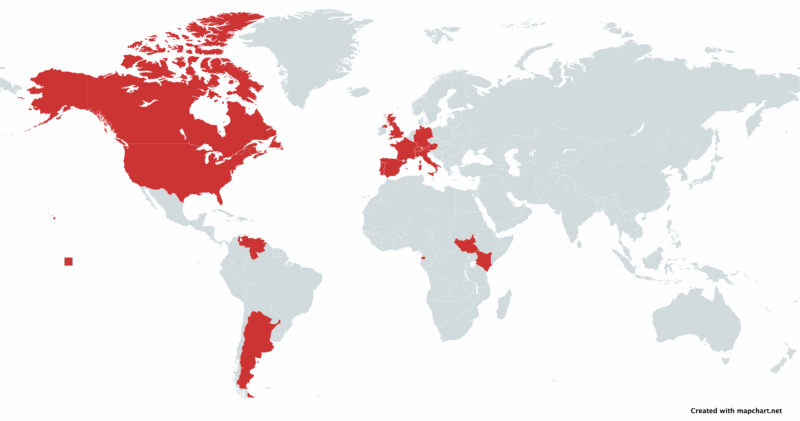
Transparency is vital in the recovery and return of assets stolen through corruption. Proactive disclosure of data and documents are key elements of public accountability. This includes publication of amounts frozen, confiscated, and returned, case information, legal frameworks and return agreements. This project led by CiFAR, based on a 2025 survey conducted through the UNCAC Coalition Asset Recovery Working Group, assesses the availability and accessibility of asset recovery data across 15 jurisdictions, covering both major asset-returning states and countries involved in efforts to return stolen funds to their jurisdiction.
Jurisdictions assessed
Results reveal significant inconsistencies across the jurisdictions
- Only a minority of countries regularly publish asset recovery data, and even fewer provide accompanying methodologies, making cross-jurisdictional comparison difficult.
- Accessing case-specific information remains highly fragmented and it is difficult across all surveyed countries to get a full picture of cases being prosecuted for corruption and of completed cases from national sources alone.
- While most countries have enacted legislation, fewer than half have published asset recovery strategies, and even fewer publish memorandums of understanding or agreements governing asset return.
- Cost apportionment and asset-sharing criteria are also rarely published, impeding public understanding of the differences between recovered and returned amounts.
Recommendations
- To facilitate public access and make it easy for stakeholders to find relevant information on asset recovery, States should set up or designate a dedicated webpage that links to all relevant legislation, strategy documents, case information, memorandums of understanding and other agreements, as well as statistics and other relevant information.
- Where documents pertinent to cooperation in asset recovery cooperation do not exist, such as strategies and policies, including around cost-sharing, States should develop these as soon as possible, in an inclusive manner, and make them publicly available.
- States should, at least annually, publish annual asset recovery statistics, as well as the underlying methodology for their statistics to facilitate interpretation. Where statistics are not collected or not collated, States should institute policies to collect, collate and publish those statistics.
- To enhance international cooperation, States should exchange experiences and consider developing coordinated approaches to gathering asset recovery statistics and in developing plans, policies and strategies around asset return.
- States should continue regularly transmitting case information to the Stolen Asset Recovery Initiative’s Asset Recovery Watch database and, where relevant, identify gaps in their reporting around cases.
- States should ensure that access to information provisions also cover in principle asset recovery related processes, so that information that is not published can be requested by stakeholders through access to information laws.
Full report
This paper was prepared by CiFAR and the UNCAC Coalition Asset Recovery Working Group in May and June 2025. The authors have made reasonable steps to ensure that the content is accurate.
The production of this report was made possible thanks to core support to CiFAR by Switzerland. CiFAR – Civil Forum for Asset Recovery e.V. is solely responsible for the contents of this publication and views expressed may not reflect those of our donors.