


1 December 2025 –
by Danella Newman, Civil Society Engagement Lead & Project Manager at the UNCAC Coalition, and Costa Rica Íntegra
With support from the UNCAC Coalition, civil society in Costa Rica shaped discussions on regulating whistleblower protection and on strengthening UNCAC implementation at the national level. Stories like this one from our member organization in Costa Rica are one way we can measure impact at the national level.
Following the publication of their civil society parallel report on UNCAC implementation in Costa Rica in mid-2021, the UNCAC Coalition continued its support of Costa Rica Íntegra to conduct follow-up activities on the key recommendations identified in their report in 2024 and 2025. Through engagement with key stakeholders from government and civil society alike, Costa Rica Íntegra managed to substantially advance discussions on strengthening whistleblower protection, and strengthening transparency of the UNCAC review in Costa Rica.
Strengthening whistleblower protection in Costa Rica
In January 2024, Costa Rica passed Law No. 10.437 on the protection of whistleblowers and witnesses of acts of corruption against workplace reprisals, filling a major legal gap as part of their compliance with their international commitment under UNCAC Article 8.4. The law aligns with international best practice in its broad personal coverage, a special protection status for whistleblowers and witnesses against any labor retaliation, a reversal of the burden of proof on the employer, strong interim measures, and a right to free legal assistance without the standard income threshold. Nevertheless, weaknesses of the law include a narrow scope, covering only corruption involving public officials, limited treatment of external or public disclosures, limited treatment of retaliation, and importantly, a lack of a clearly designated independent whistleblower protection authority, relying primarily on labour courts.
Using the momentum of the 12-month timeframe for the government to specify the regulation of the law, Costa Rica Íntegra compiled a comparative analysis of international best practices and approaches to be considered for the regulation. They reviewed whistleblower protection laws in Latin America, the European Whistleblower Directive from 2019 and its implementation in countries such as Spain, the Draft Model Law of the Organization of American States, as well as UNCAC CoSP Resolution 10/8 on the protection of reporting persons from 2023. Additionally, they collected input from international experts on whistleblower protection, including Tom Devine from Government Accountability Project, and Claire Launay Gama from Transparencia por Colombia, as well as other experts from UNODC and at the national level.
Before they could organize workshops to discuss this document with a wide range of government experts, they realized that, despite not having consulted with any other institution, a representative from the Ministry of Labor and Social Security had drafted the regulations for Law 10.437 and had submitted it to the Department of Laws and Decrees for final approval and publication in the Official Gazette.
Nevertheless, after subsequent communication with the Deputy Minister of Labor responsible for leading that regulatory effort, he indicated that the process of drafting the regulation was still ongoing. He expressed his willingness to receive feedback and even appointed two officials from the Ministry to the expert workshop organized by Costa Rica Íntegra.
Costa Ríca Íntegra proceeded to:
- Raise awareness amongst public institutions of the lack of whistleblower cases and mechanisms to collect statistical information on protection measures, etc. since adoption of the law, by submitting several requests for information. The relevant institutions reacted by stating they would start implementing these measures.
- Hold individual meetings with key stakeholders, and convene a wide range of governmental and non-governmental experts on whistleblower-related issues to discuss and further expand their comparative analysis and recommendations for the law’s regulation at a workshop in late May 2025. This allowed them to gather political support for their recommendations and integrate new proposals for improvements to complaints systems and collecting statistics.
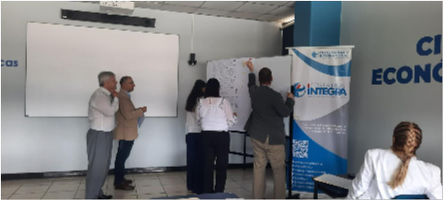
Workshop attendees included representatives of the judiciary, the Public Defender, the Deputy Prosecutor’s Office for Integrity, Transparency, and Anti-Corruption, the Ombudsman Office, the Ministry of Labor and Social Security, the Ministry of Finance, the Office of Public Ethics, the Comptroller General of the Republic, the Ministry of National Planning and Economic Policy, National Council of University Presidents. - Conduct two surveys with internal auditors and service comptrollers to collect additional data on whistleblower complaints received and processed, and raise awareness of this law after more than a year of its entry into force in February 2024. The surveys had a good response rate with 44 out of 226 auditors and 53 out of 92 service comptrollers submitting data. The findings show that only 75% of active administrations reporting channels in the public sector. Almost all of them protect the confidentiality of the reporter’s identity and accept anonymous reports. In 85% of internal audits and Comptroller’s Offices, training on Law 10.457 has been provided.
Through the compilation of information gathered from these activities, Costa Rica Íntegra submitted to the Ministry of Labor and Social Security a comprehensive proposal with specific recommendations to be considered in the regulation of Law No 10,437 on whistleblower protection, and requested a meeting with those responsible for drafting the still – after several months of ongoing advocacy activities – unpublished regulation.
Successes and impact
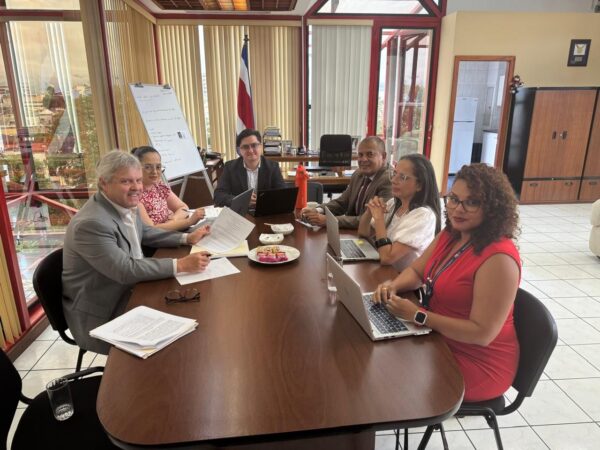
A major success of these follow-up activities was being granted two working meetings with the Deputy Minister of Labor and Social Security, the second of which included the Director of the Public Ethics Office, in July and August 2025, to present Costa Rica Íntegra’s key recommendations for the regulation of Law No. 10.437 in detail. They were assured that their recommendations were going to be taken into consideration when revising the regulation.
The second major outcome of these follow-up activities was the elaboration and publication of a comprehensive, visually easily-understandable Guide for Whistleblowers. The 35-page guide includes a motivational letter to encourage potential whistleblowers to report. It outlines the legal framework for the protection of whistleblowers in Costa Rica, important concepts, a step-by-step guide on how to report corruption, including the available channels, 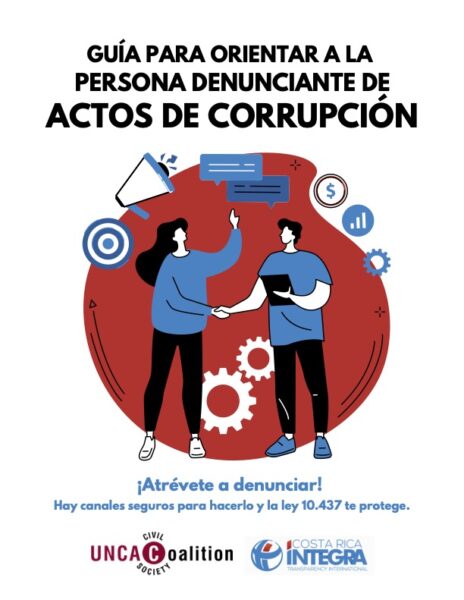 important information on the rights of whistleblowers, practical examples and statistics, as well as a directory of public labor defense offices across the country, including QR codes – all in a visually-appealing and simple format.
Costa Rica Íntegra launched the Guide as part of the National Forum on Democracy and Civil Society in the University of Costa Rica on 19 August 2025, in a hybrid format. On 22 August 2025, they presented the guide in a webinar attended by 70 public officials from the nearly 30 public sector comptroller’s offices. Besides publishing it online, the guide was distributed to more than 30 NGOs and sent via letter to key public sector authorities. Additionally, 250 informational posters with a QR code to the guide for easy access were distributed in public offices throughout the country, and two informational webinars were held for public officials on 22 August and 17 September 2025. The guide was also publicized in two media outlets (see here and here). The guide was received very positively by both civil society and governmental stakeholders.
Increasing transparency and civil society participation in the UNCAC review and its follow-up
The second goal of the advocacy activities was to increase transparency of Costa Rica Íntegra’s 2nd review cycle documents, and to ensure participation of civil society in the follow-up of the recommendations. Costa Rica Íntegra met with Mr. Armando López, Public Ethics Prosecutor, on several occasions to underscore the importance of these points. The Office of the Attorney General was also engaged in conversations of publishing Costa Rica’s key review documents on a governmental website.
This led to a commitment by the Office of the Attorney General to publish the documents and other information on their website once the website had been revamped. However, to date this has not happened yet.
With a view to the upcoming 11th UNCAC Conference of the States Parties, Costa Rica Íntegra sent letters to the Costa Rican Embassy in Vienna and the Director of Foreign Policy at our Ministry of Foreign Affairs, requesting a meeting to discuss how to increase transparency and participation of civil society in UNCAC reviews. However, to no avail.
Outlook and next steps
Costa Rica Íntegra substantially informed the discussions of key governmental and non-governmental stakeholders on the implementation and regulation of Law No. 10,437 on the protection of whistleblowers and witnesses of acts of corruption against workplace reprisals. Their engagement has built trust between civil society and government, and paved the way for continued constructive dialogue. Hope remains that their recommendations will be taken into account in the still pending regulation of the law. While the whistleblower guide provides a great resource for victims and anyone interested in reporting corruption, there remains a long road ahead before achieving comprehensive protection for whistleblowers in Costa Rica, and elsewhere.
To ensure sustainability of these activities, Costa Rica Íntegra will continue to raise awareness of the guide through webinars and engagement with relevant stakeholders. Furthermore, their continued monitoring of the regulatory process is ensured, based on a Memorandum of Understanding between the CSO and the Judiciary to organize the celebration of World Whistleblower Day in June of each year.
The organization will also continue to ask for publication and dissemination of Costa Rica’s UNCAC review documents, and follow-up on its recommendations with the involvement of civil society, and for Costa Rica to sign the Transparency Pledge – before, and after the national elections in February 2026.
See other examples of follow-up activities we have supported here.