Trust in democratic governments has declined in recent years, including across Europe. In some countries, this manifests as political and social tension; in others, as a disengagement from elections and civic participation. Meanwhile, governments continue to adopt anti-corruption strategies, create specialized institutions, announce ambitious reforms and convene new alliances to strengthen integrity. However, new laws do not necessarily translate into effective implementation, and this gap between commitments and delivery is part of what explains the erosion of public trust.
The European network of the Global Civil Society Coalition for the UNCAC convened its 24th regional meeting on 22 September 2026 to discuss this gap, and the roles civil society organizations (CSOs) can play in closing it.
A persistent gap between reform on paper and reform in practice
In the EU, the European Commission’s 2026 Rule of Law Report found uneven progress across justice systems, anti-corruption frameworks, media freedom and institutional checks and balances. In the Western Balkans: the SELDI network points to a persistent gap between formal compliance and governance outcomes,, despite substantial legislative alignment with European standards.
More broadly, while many countries have adopted anti-corruption strategies at the highest level of government (including Finland, France, Switzerland, Greece, Spain or Italy), periods of “vacuum” are frequent over time, undermining reform progress. Strikingly, only 1 in 4 OECD Member countries tracks implementation of their anti-corruption strategy in practice.
In this context, guest speakers and participants addressed two central questions for anti-corruption CSOs, caught between citizens and institutions:
- How can civic pressure lead to concrete and sustainable reforms?
- How can CSOs push governments to act, cooperate with them, and assess progress, all while safeguarding their independence?
Corruption, democratic erosion and the fight for accountability in Greece
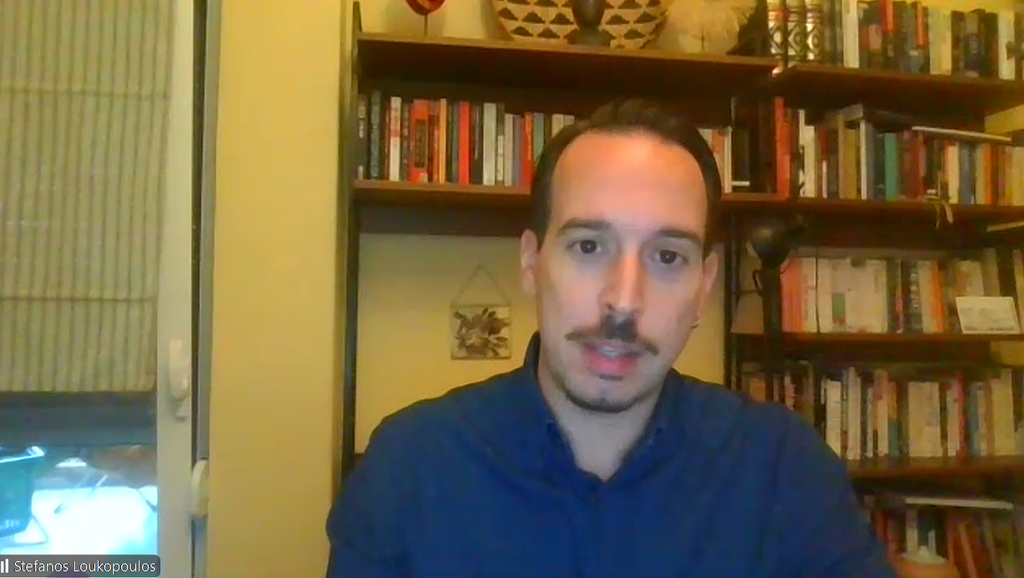
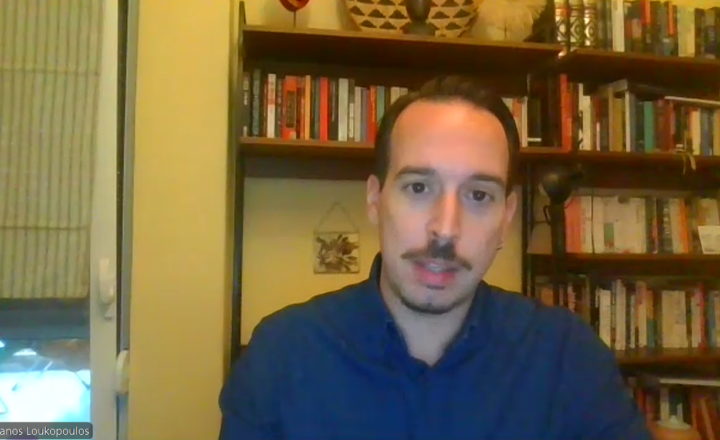
Stefanos Loukopoulos, Co-founder and Director of Vouliwatch, argued that corruption in Greece has not just been costly: it has reshaped how citizens perceive politics and democracy. He traced how Greece’s 2010 financial collapse exposed decades of clientelism and entrenched elite networks. The public outcry that followed has since turned into something more corrosive: apathy and resignation. Turnout fell to a record-low 53% in the 2023 national elections and around 41% in the 2024 European elections. Yet, 98% of Greeks believe corruption is widespread – the highest share in the EU.
“People are not unaware of corruption, they have simply stopped believing their vote can change anything. We should make citizens believe again that there can be a political system without corruption.”
Stefanos pointed to emblematic scandals, such as the misappropriation of EUR 22 million of agricultural subsidies by faking land ownership, in a scheme implicating Members of Parliament, and the 2023 Tempi train crash, which killed 57 people after a long-delayed signalling system funded by the EU was never installed.
At the same time, Greece has legislated extensively under EU and OECD pressure: on lobbying rules, whistleblower protections, and a strengthened right to information. But implementation falls short: of 409 public entities and representatives registered on the lobbying transparency portal, only a handful have disclosed a single meeting with lobbyists, and it took Vouliwatch 3.5 years of requests and appeals to obtain the ministers’ gifts registry – which the law required to be published proactively. Legislation without implementation he concluded, is only a smokescreen for real transparency that furtherdisillusions citizens. Vouliwatch therefore test and report on the state of the rule of law in Greece, to demand that laws are adequately implemented.
Between political promises, civil society monitoring and institutional experience in North Macedonia
In North Macedonia, Snezhana Kamilovska Trpovska, Project Coordinator at the Macedonian Center for International Cooperation (MCIC), described a similar dynamic. According to MCIC’s 2025 corruption assessment, citizens feel see corruption not as an anomaly, but as the operating system of public life: almost 80% expect it will continue and trust in the judiciary and prosecution has fallen below 6%. The national platform for public consultation on draft legislation has become a “compliance exercise”: more than 65% of draft laws are uploaded with very short consultation windows, and 80% of civil society’s technical input in working groups is rejected without explanation.
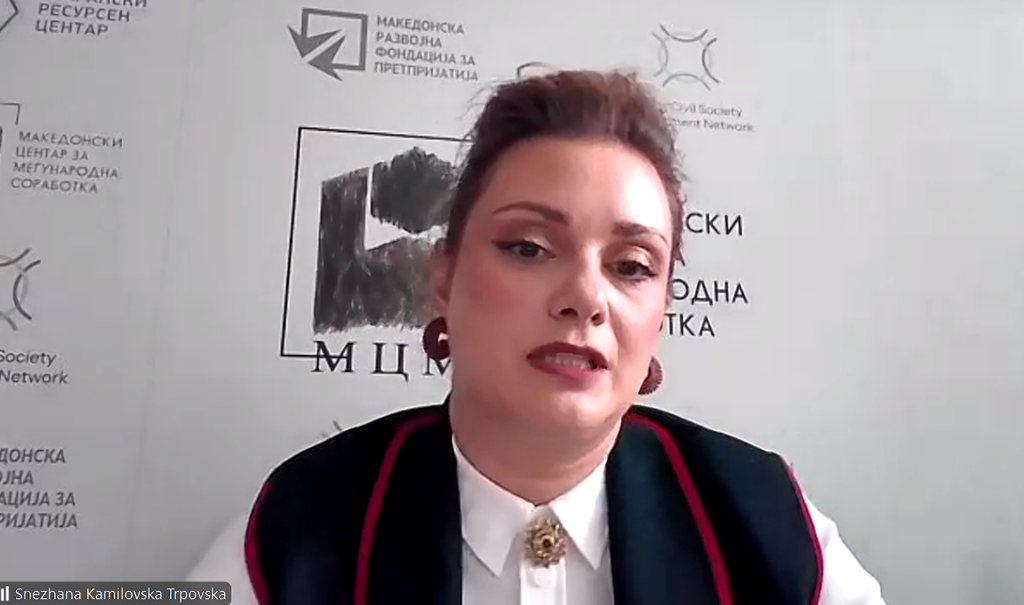
Reforms in North Macedonia are never proactive, Snezhana argued, but tend to arrive only after tragedy – last year, a terrible fire in a nightclub in the town of Kocani killed 63 young people. This tragedy exposed serious failures in safety, oversight and public procurement, and triggered mass protests demanding accountability.
Yet the political promises made in the immediate aftermath of tragedies quickly fade once public attention moves on. And CSOs seeking to support and sustain these citizen protests with evidence may face SLAPPs (without any legal protection so far), coordinated harassment campaigns and attacks, and operate in a deeply polarized political environment where any attempt of legitimate, evidence-based criticism is interpreted as political opposition.
“Real changes happen only when civil society makes the political and public cost of inaction unacceptably high for those in power.”
Snezhana’s answer to the question of whether civic pressure can still drive change is therefore a conditional yes: only if civil society organizations refuse to participate in the illusion of formal compliance, and can work safely by building collective protection mechanisms, including at the regional level, standing together so that no organization is left isolated when facing political pressure.
Hungary: a new window of opportunity
Anti-corruption agendas have also proven electorally powerful: in Hungary, a new coalition won the elections in Hungary in April 2026 on the promise of constitutional and legal changes to combat corruption, after 16 years of Viktor Orbán’s ruling. This is why Sándor Léderer, Co-founder and Director of K-Monitor, offered a cautious, but more hopeful, account.
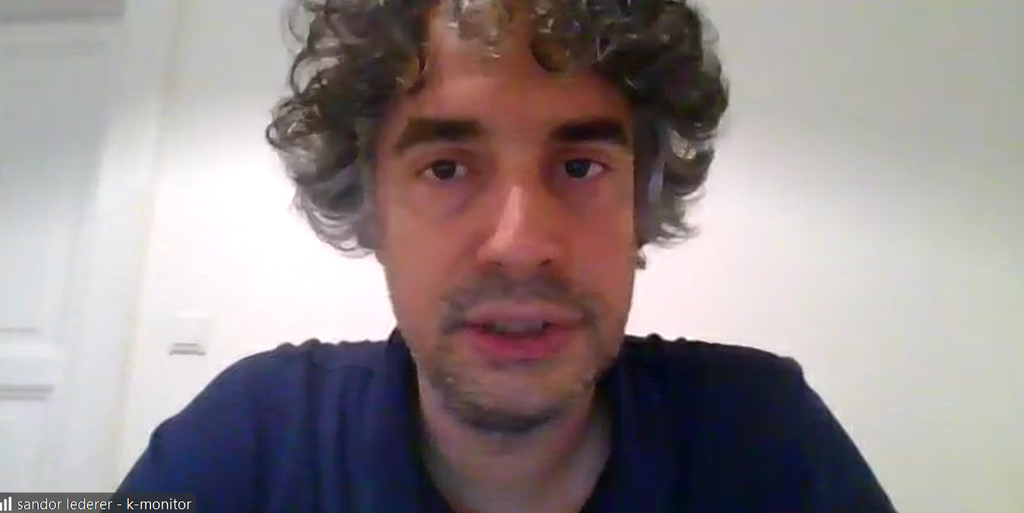
The previous system, built of entrenched clientelism, resulted in growing public disillusionment and a political scandal catapulted a new opposition figure, Péter Magyar, to the government on an explicit anti-corruption platform. Magyar’s party won a two-thirds majority in April’s elections, with turnout reaching 79% – the highest since 1990.
The new government has since moved to fulfil both EU requirements and its own campaign promises. For instance, a new asset recovery and protection authority was established with powers to indict independently – the selection process for the leadership of this body was more open than anything under the previous government, even though the appointment drew criticism from CSOs. Additionally, asset declaration rules have been strengthened on paper, and a broader constitutional definition of public funds has been restored.
“The most important priority is to pursue reforms that expand the space in which civil society and the media can operate. A strong legal framework can preserve our ability to seek information, challenge decisions and hold governments to account, even when the political environment deteriorates.”
In light of this opportunity, K-Monitor’s strategy has also shifted toward three priorities: 1) supporting implementation of reasonable anti-corruption commitments, 2) holding the government to account for its promises – and investigating illicit enrichment of the previous government – and 3) pushing for broader legal reforms, such as on freedom of information and lobbying, that would strengthen civil society’s room to manoeuvre regardless of who is in power.
Civil society alliances and international solidarity
The open discussion surfaced recurring themes across very different national contexts -from navigating political divisions within governments, to building alliances that can survive changes in political circumstances, and by looking beyond elected officials and engaging civil servants, who often shape how reforms are implemented in practice.
To make a compelling case for potential donors, a point was made on the need to find country-specific entry points for anti-corruption work, and connect them with international concerns – such as transnational investments and tax evasion. The United Nations Convention against Corruption (UNCAC) provides a useful framework here: Article 5 requires not only anti-corruption policies but their effective, coordinated implementation, societal participation, and periodic assessment. Articles 10 and 13 tie implementation to transparency, access to information and active civil society participation. The next phase of the UNCAC IRM, starting in mid-2027 will also shift its focus to effective implementation of UNCAC provisions in practice.
Sustainability emerged as another important concern, with participants exploring how CSOs can maintain their work and reduce their dependence on increasingly constrained funding.
The debate concluded with a strong call for greater solidarity across civil society. At national level, broad and durable coalitions – formal and informal – carry more weight with governments than fragmented efforts. At regional and international levels, networks can provide support, visibility and protection when organizations come under pressure.
If you are a civil society activist from Europe and would like to become involved, please contact our Regional Coordinator Ana Revuelta Alonso at ana.revuelta@uncaccoalition.org.