Civil society plays a crucial role in preventing and combating corruption, which is explicitly recognized by the UNCAC in Article 13 (participation of society), Article 10 (access to information), and other provisions. A well-informed and engaged civil society provides expertise, experience, and perspectives that are different from that of governments, contributing to more effective anti-corruption outcomes and better decisions for the public interest.
A safe and enabling environment is critical to ensure that the conditions are present for civil society to operate independently and without fear of reprisal in their efforts to combat corruption, as envisioned by the UNCAC, the UN Special Session against Corruption (UNGASS) Political Declaration, and Resolution 10/1 Atlanta 2023.
However, civic space is shrinking worldwide, and those fighting corruption are on the front lines.
This page sets out the key challenges for civil society actors working on anti-corruption, what States must do to uphold their UNCAC obligations and other global commitments on civil society protection and participation. From here you can also access a list of organizations and resources available where civil society actors facing challenges can get help and support.
Shrinking civic space and the fight against corruption
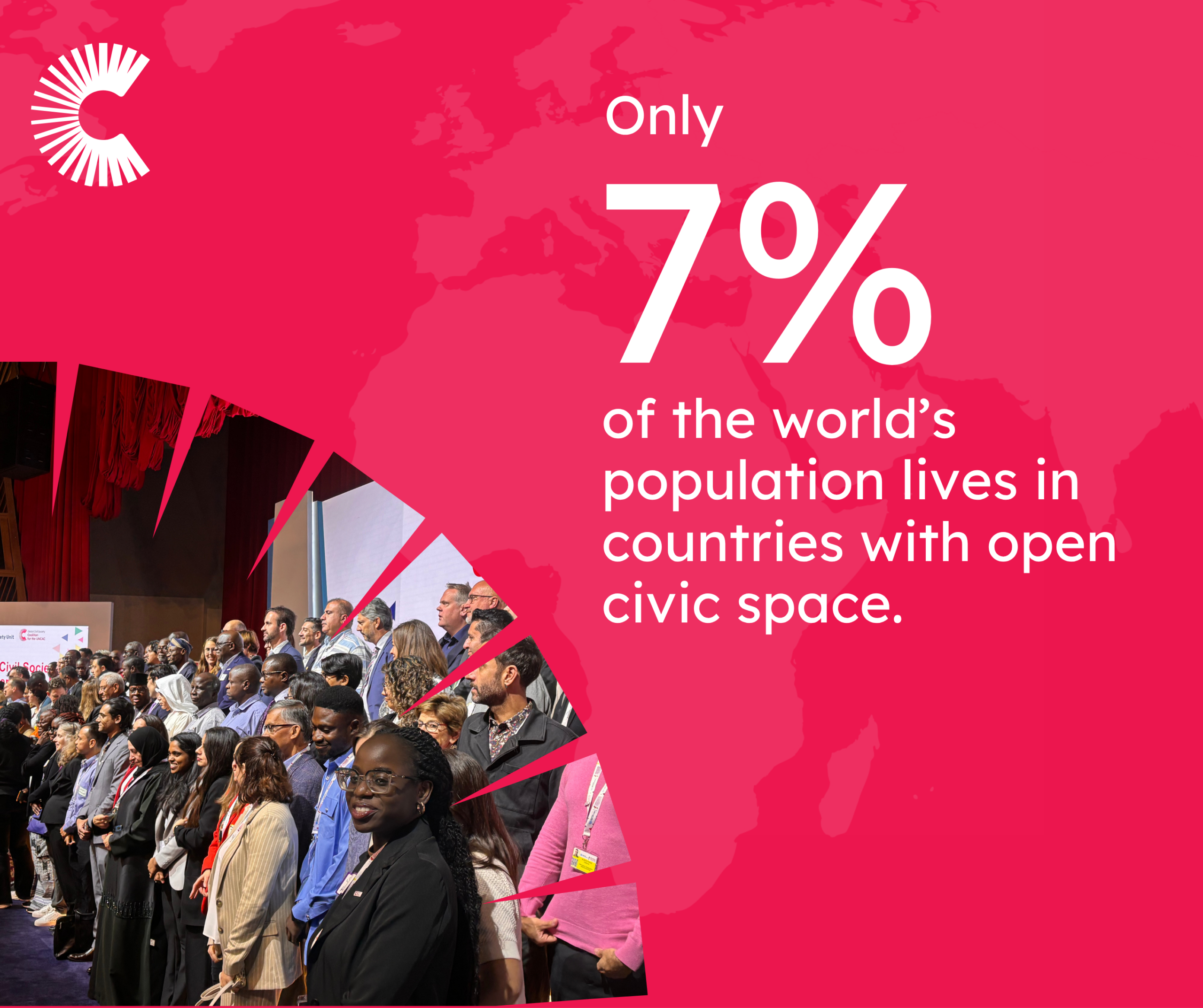
Significant geopolitical shifts, funding cuts, and increasing restrictions that have occurred in recent years have only deepened the challenges for civil society across the globe. The CIVICUS Monitor 2025 reports that civil society is coming under severe attack in a record number of countries – 122 of 198 countries and territories.
Activists, investigative journalists, whistleblowers, witnesses, academics, and civil society organisations (CSOs) and other civil actors face a wide range of threats in carrying out their anti-corruption work. As a group of UN Special Mandate Holders warned in an unprecedented statement in August 2025, safeguarding civic space and enabling civil society participation are fundamental obligations under both UNCAC and international human rights law. Corruption thrives where accountability is absent, and accountability depends on civil society’s ability to investigate, report, organise, and speak freely.
Challenges facing civil society working on anti-corruption exist on two fronts:
- At the national level, civil society actors often face a hostile and sometimes dangerous environment simply for doing their work.
- In global fora, including UNCAC fora (review processes, the Conference of States Parties and subsidiary bodies), civil society continues to face barriers to participation and access to information.
“Those who expose corruption – civil society, journalists, academics, researchers, human rights defenders, activists – are often the ones that pay the highest price”
Gina Romero – UN Special Rapporteur on the Rights to Freedom of Peaceful Assembly and of Association.
Challenges at the national level
General threats to the safety and security of CSO members, including physical attacks, intimidation, harassment, stigmatization, and reputational attacks, anti-NGO narratives, as well as online attacks such as surveillance and digital threats.
Restrictive laws make it challenging for CSOs to register, be established, or operate. “Foreign Agents Laws” equate civil society’s receipt of international funds with being a tool of foreign influence. Such restrictive laws and the weaponization of laws create barriers for CSOs to operate effectively, presenting direct threats to the freedoms of expression, association, and assembly.
Barriers to freedom of expression, including online, and the proliferation of Strategic Lawsuits Against Public Participation (SLAPPs) are often used to intimidate and silence CSOs and journalists. Institutional mechanisms are also abused to restrict the work of CSOs. For example, judicial bodies have launched investigations against CSOs for merely carrying out their work.
Impediments to effective access to information continue to pose a major challenge in countries across the globe. While Freedom of Information Act (FOIA) laws exist, new legal exceptions are increasingly encountered, making it harder to access public information, which is critically important for civil society to monitor and advocate for anti-corruption measures and their implementation. Journalists often find themselves in the role of defending the right to information. The conflict between data protection and access to information is another major concern, where privacy clauses are often used to block access to critical information.
Restrictions on civil society in UNCAC and other global fora
Civil society actors continue to face restrictions to fully participate in UNCAC fora, which contradicts the fundamental rights of freedom of expression, assembly, and association, and the spirit and intent of Article 13 of the convention. It also goes against the UN’s own Guidance on UN Guidance Note on Protection and Promotion of Civic Space (2020) and the Guidelines to States on effective implementation to OHCHR, ”Guidelines for States on the effective implementation of the right to participate in public affairs”.
Recommendations for States
The Global Civil Society Coalition for the UNCAC and its network advocate for governments to fully meet their UNCAC commitments. Below are our recommendations to States for improving civic space.
At the national level, we call on governments to:
States Parties have an obligation — under the UNCAC and international human rights law — to ensure conditions in which civil society can operate independently and without fear of reprisal. To fulfil these obligations, States should:
- Adopt and effectively implement laws and policies that align with the spirit and intent of UNCAC Article 13 and international human rights standards, including the rights to freedom of assembly, association, and expression. This includes supportive laws for activists and journalists, effective access to information, and ensuring civil society actors have access to funding for legal protection.
- Regularly review and revise national laws to ensure compliance with international standards and address any restrictive laws that create barriers for CSOs to operate. Where strong laws already exist, robust monitoring mechanisms are needed to ensure they are upheld in practice.
- Go beyond consultation and adopt genuinely participatory forms of civic engagement in anti-corruption — for example, in the oversight of climate finance funds.
- Create inclusive environments where civil society can actively contribute to discussions and decision-making on anti-corruption laws, strategies, and other measures, and ensure civic space is a central feature of national anti-corruption conversations.
- Carry out their UNCAC country reviews under the
States should take the following individual and collective steps to defend civil society:
- Put in place adequate national mechanisms to protect those at risk and enable them to continue their work.
- Take active and coordinated diplomatic and other pressure to defend civil society members coming under attack in other countries.
- Consolidate and better coordinate existing protection mechanisms, particularly for those targeted specifically for anti-corruption work.
- Ensure that legal protection for journalists is accessible and affordable.
Given the funding crisis, States and donors should:
- Urgently and collectively increase financial and other support for civil society actors, networks, and coalitions working on anti-corruption, ensuring they can operate in a sustained manner and respond to increasing threats.
- Recognise the challenges of project-based funding and support efforts to diversify civil society’s revenue streams to ensure long-term viability and effectiveness.
- Ensure that governance and anti-corruption work is not deprioritised in funding allocations.
- Allow non-governmental stakeholders to participate as observers in meetings of the UNCAC subsidiary bodies (IRG, Working Group on Prevention, Working Group on Asset Recovery).
- Increase access to information about the discussions of subsidiary bodies and related technical assistance programmes and outcomes.
- Strengthen transparency and civil society participation in ongoing UNCAC country reviews, including by publishing all country review reports and self-assessment checklists.
- Strengthen the IRM in its next phase to foster genuine civil society participation in key stages of the review process and robust follow-up.