22 March 2024 – Money laundering is a complex and dynamic challenge across the Asia-Pacific region. It involves disguising financial assets derived from criminal activity into funds with an apparently legal source, with devastating economic, political and social costs including drug trafficking and smuggling. Concerns are being raised over this issue, with calls for greater regional cooperation in the fight against money laundering. The UNCAC Coalition’s 15th Asia-Pacific regional meeting focused on challenges of money laundering in the Pacific Island Countries, and the role of civil society in combating money laundering at the regional level, with presentations from Julie Haggie , CEO, and Adam Hunt , Board Member, of Transparency International New Zealand.
Challenges of Money Laundering and Anti-Money Laundering Efforts in the Pacific Island Countries (PIC)
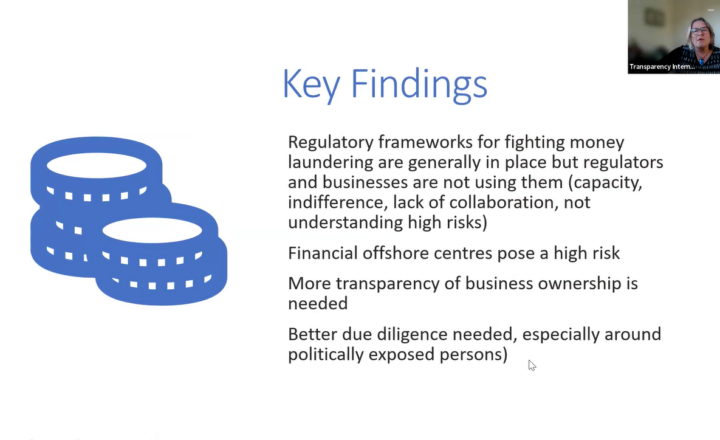
Globally, an estimated 800 billion to 2 trillion US dollars is laundered annually, despite ongoing efforts to fight against money laundering, including regional and global initiatives such as the Asia-Pacific Group on Money Laundering (APG) and the Financial Action Task Force (FATF). Referring to their report on corruption and money laundering risks across the Pacific Islands, Transparency International New Zealand (TI NZ) emphasized the importance of having quality research on the topic, and of targeting the right audience. They mentioned how a study on corruption and money laundering in the Pacific found that regulatory frameworks for fighting money laundering are generally in place but not being used by regulators and businesses. Major challenges to the fight against money laundering in the region include the lack of capacity of regulatory bodies, the lack of commitment to anti-money laundering efforts resulting in limitations to identifying the risk points of money laundering, and a lack of collaboration. Financial offshore centers also pose high risks. Highlighting the importance of transparency of business ownership, Julie from TI NZ suggested the need for better due diligence, especially concerning politically exposed persons. wp:image {“sizeSlug”:”full”,”linkDestination”:”none”,”id”:3054}
Julie Haggie, Transparency International New Zealand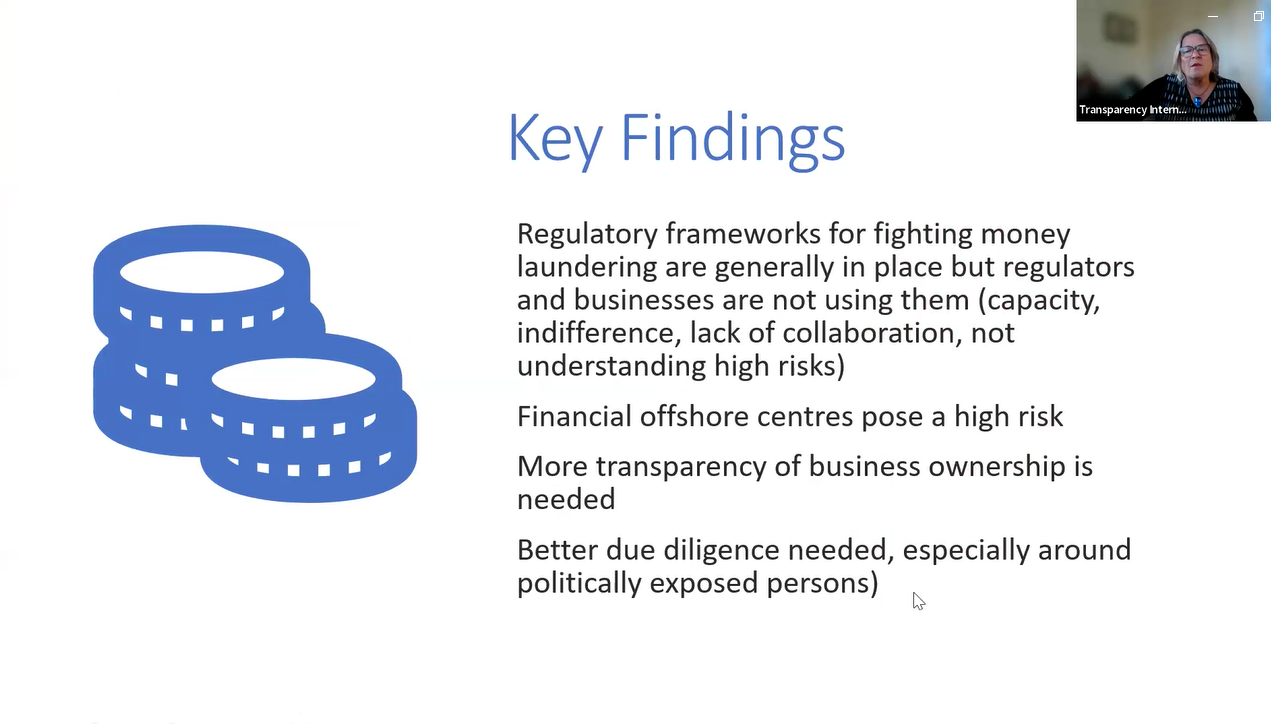
Money Laundering and Corruption
Adam from TI NZ discussed the impact of corruption in developing nations concerning large cash inflows. Drug trafficking and real estate are crucial sectors to focus on when investigating the dynamics of money laundering. Following the money to find where it’s going, how it’s being concealed, and who is benefitting are important to consider in anti-money laundering efforts, and CSOs have an important role to play in conducting research and advocating for changes to combat money laundering. wp:image {“sizeSlug”:”full”,”linkDestination”:”none”,”id”:3055}
Adam Hunt, Transparency International New Zealand
Anti-Money Laundering Strategies: Penalty or asset forfeiture
During the subsequent discussion, participants highlighted the role of civil society in reporting money laundering cases and allegations directly to law enforcement agencies. Questions were raised about the effectiveness of capital punishment as a deterrent for money laundering offenders, and on imprisonment approaches, such as asset forfeiture, which were considered to be more effective. Adam also shared his insights on the importance of the self-regulation of lawyers and anti-money laundering practices, emphasizing the importance of having a strong regime around asset forfeiture, and the role CSOs can play in advocating for an adequate process for it. The role of education and culture was also emphasized.
What can CSOs do?
Civil society can advocate for greater beneficial ownership transparency, and work to collect evidence and make recommendations accordingly. Early engagement with targeted audiences is important, and persistent advocacy is necessary for creating inclusive environment for CSOs and for the value-added by civil society. Partnership with other CSOs and relevant entities can further these efforts. CSOs also play a crucial role in mobilizing the public to spread concerns over money laundering, which creates demand for action. Exposing money laundering-related information through research can be an effective strategy, and media stories can have more impact in creating demand for effective anti-money laundering initiatives.
If you are a civil society activist from Asia-Pacific and would like to become involved, please contact our Regional Coordinator Fatema Afroz at fatema.afroz@uncaccoalition.org.


