Why the Pledge?
In the negotiations for the UNCAC review mechanism, a small group of influential countries blocked the inclusion of key provisions for transparency and participation of civil society. Consequently, the terms of reference of the implementation review mechanism adopted by the UNCAC Conference of the States Parties (CoSP) in 2009 leave it at the discretion of each State Party to decide on the extent of civil society participation and transparency in their country review. Then, after adoption of the review mechanism, the same small group of countries blocked civil society representatives from attending meetings of the UNCAC Implementation Review Group, which oversees the review process. This has remained the state of play up to the present.
This outcome is inconsistent with international human rights standards and with the provisions of UNCAC itself. The UNCAC prevention chapter contains numerous references to transparency and recognizes the importance of civil society participation in anti-corruption efforts.
Despite the weak framework, most countries voluntarily facilitated some civil society involvement, including meetings with review teams, in both the first cycle of the UNCAC review process (2010-2015) which covered criminalizsation, enforcement and international cooperation, as well as the second ongoing review cycle (2015-now). Many also agreed to more transparency than is provided for in the terms of reference.
While UNODC statistics state that 98% of States Parties have included non-state actors in their reviews, it is important to make the distinction between non-state actors and independent civil society. It continues to be up to the discretion of the State under review which non-governmental stakeholders they invite to be part of the review process, which can lead to only private sector, academia or government-near civil society to be involved. Since the review reports do not specify which stakeholders exactly were involved in the review, it is often unclear who the “non-state actors” involved in reviews really were, and the extent of their involvement.
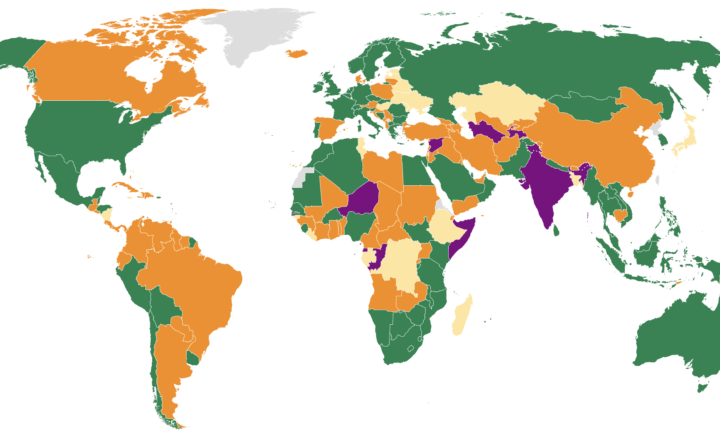
Through outreach and engagement with UNCAC focal points, we collect this type of information and portray it on our UNCAC Review Status Tracker.
Frequently asked questions?
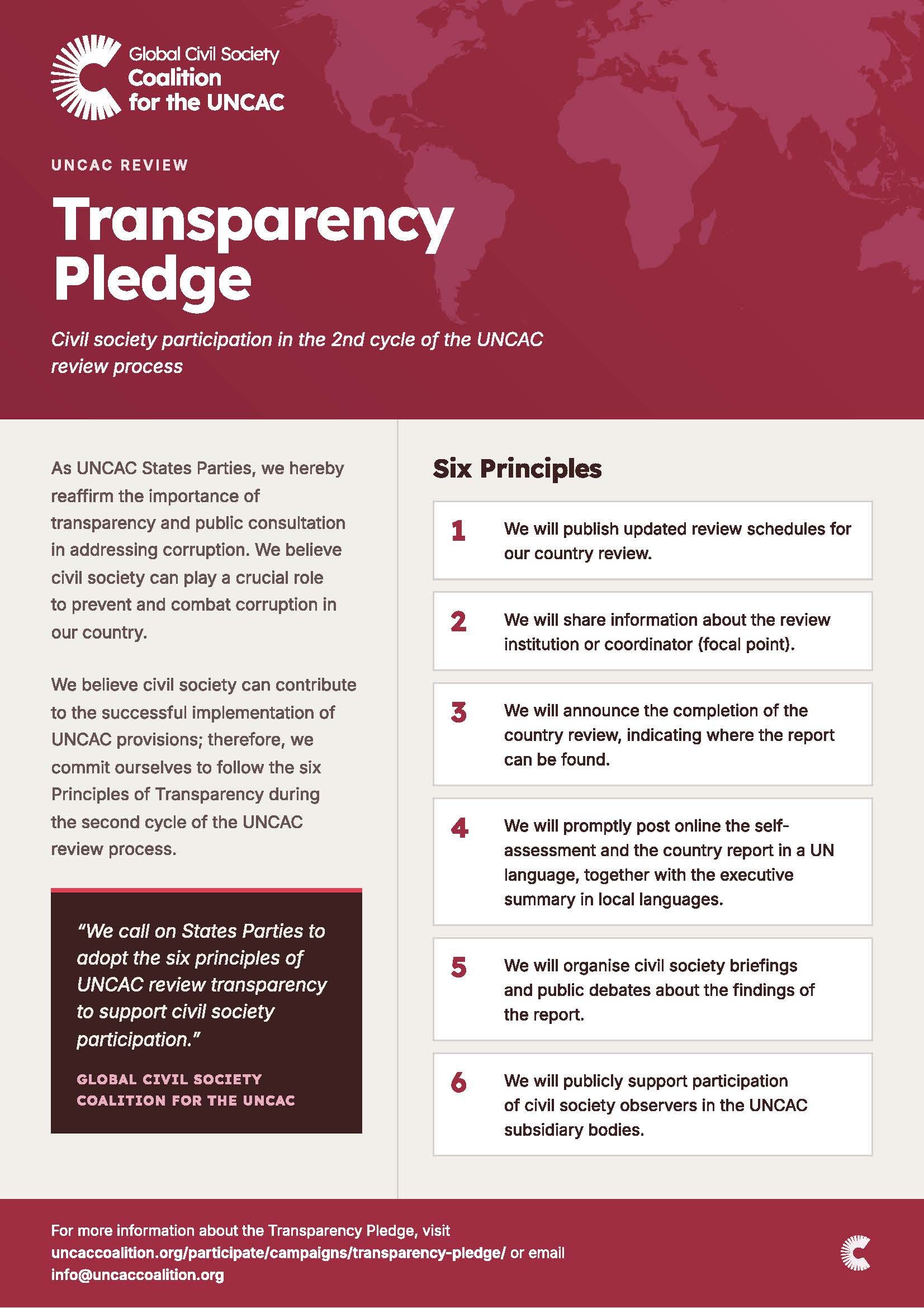
While this is a State commitment, it is usually the head of the institution designated as the UNCAC focal point for the second review cycle that signs the Pledge. In many cases, this is the Minister of Justice, in others it is the head of the anti-corruption body or of the anti-corruption unit within another institution. This is up to the State actors to decide.
The document that needs to be filled out and signed is the following template signature letter, available in English, Spanish or French. The text of the template letter can be transferred to your institutional letterhead or filled out and signed as it is.
Please send the signed Transparency Pledge to the Managing Director Mathias Huter at mathias.huter@uncaccoalition.org and Civil Society Engagement Lead and Project Manager Danella Newman at danella.newman@uncaccoalition.org.
We are convinced that it is impossible to fight corruption from behind the shadows. If you agree, please join us and encourage your government to sign the Pledge.
- Check where your country stands in its 2nd cycle review on our UNCAC Review Status tracker.
- Get in touch with your UNCAC focal point (let us know if you don’t know who it is):
- If the review is still ongoing, express your interest in becoming involved. Please check the Guide above for ideas on how to do so, or contact us on suggestions. Ask them to sign the Pledge and direct them to this webpage.
- If the review has been completed, but you know civil society was involved in the review in one way or another, ask them to sign the Pledge.